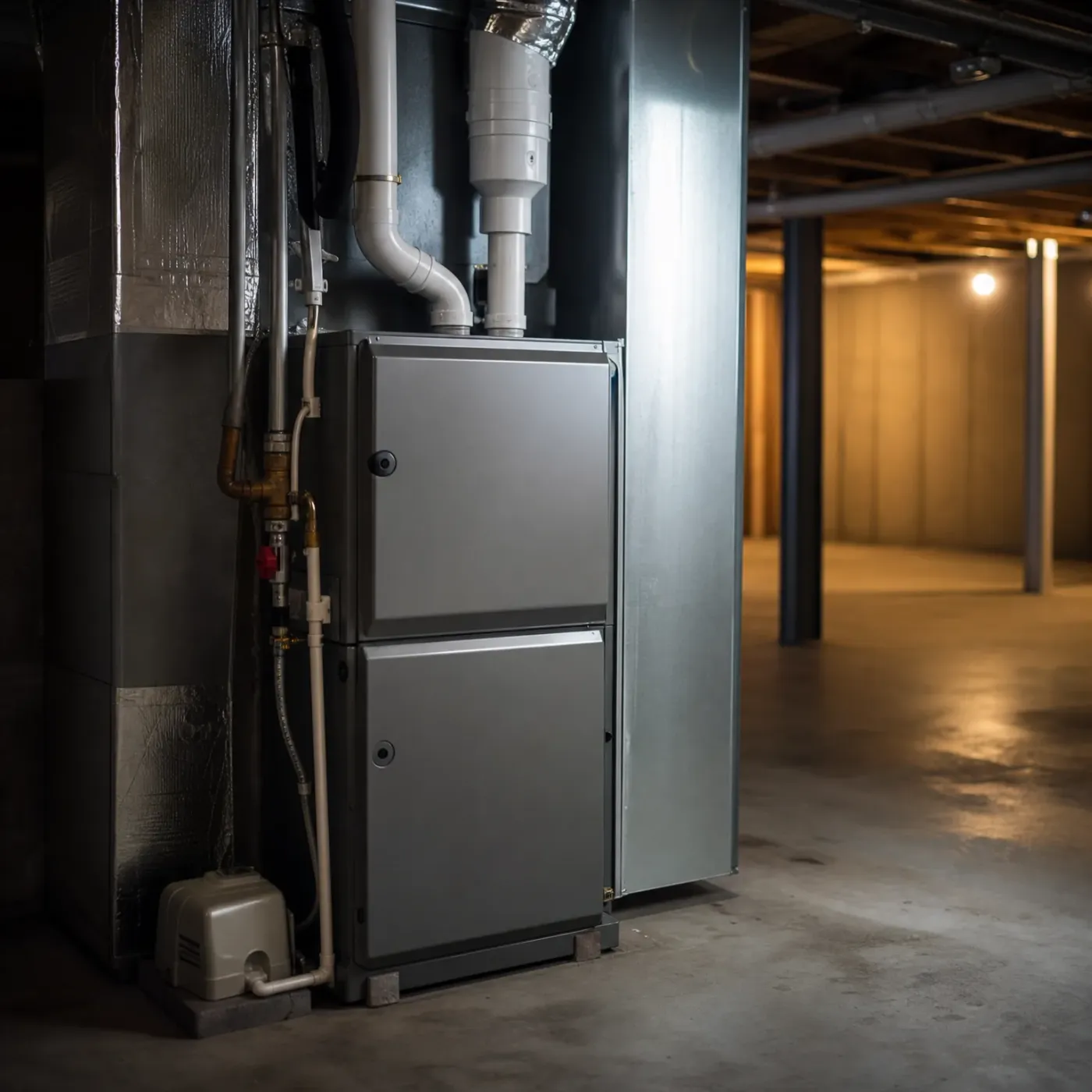
Matched to your furnace job
Furnace on but house still cold in Connecticut
Furnace running but the house won't warm up is usually one of a few things: a clogged filter choking airflow, a thermostat out of sync, ductwork losing heat before it reaches the rooms, or a furnace that's struggling and losing the fight against a Connecticut winter. This page walks through what's likely going on. Answer a few questions and a contractor who covers your area will reach out about getting it fixed.
Connect with a proA furnace that runs without warming the house is usually failing at one of two jobs: it's not moving enough air, or it's not making enough heat. A dirty filter or a blower motor running weak will choke off airflow, so the furnace fires but only trickles warm air out of the vents. A cracked heat exchanger, a failing igniter, or a gas valve not opening all the way means it's not producing enough heat to keep up, especially once outside temperatures drop into the teens and twenties, which Connecticut sees for weeks at a stretch each winter. Thermostat placement or a bad sensor can also tell the furnace to stop before the house is actually warm. None of these fix themselves, and a furnace that's struggling tends to struggle harder as the season goes on, not better. Figuring out which one it is takes someone looking at the actual system, not guessing from the thermostat.


How a Furnace Actually Delivers Heat
- A furnace heats in cycles, so short bursts that stop and start under ten minutes often point to a cracked heat exchanger shutting things down for safety.
- The limit switch cuts the burners if the plenum gets too hot, which happens when a blower can't push air fast enough past a dirty filter.
- Gas furnaces need a strong flame sensed by the flame sensor within seconds, or the igniter tries again and the house loses that cycle's heat.
- Air takes the path of least resistance, so a duct that's come loose in a cold crawlspace can be dumping warm air there instead of your living room.
- A thermostat set to 'auto' only runs the blower while the burners fire, so between cycles no air moves even though the furnace is technically on.
- Oversized furnaces for a house's actual heat loss short cycle by design, heating the air near the thermostat fast without warming rooms farther down the duct run.
A furnace isn't one long burn. It cycles on, pushes heated air through the ducts, and shuts off once a sensor or the thermostat says enough. Each of those steps can fail on its own without the furnace ever shutting down completely, which is why it keeps running and the house still doesn't warm up. The limit switch is a safety device, not a thermostat. It watches the plenum temperature, and if a dirty filter or a weak blower motor can't move air fast enough to carry that heat away, it cuts the burners before anything gets dangerous. That's a short cycle with a real cause behind it, not a glitch. The flame sensor does something similar on the combustion side. It has to see a flame within seconds of ignition or the control board kills that cycle and tries again, and every failed attempt is heat the house never got. Where the air goes once it leaves the furnace matters just as much as whether it was made. A duct joint that's worked loose in a crawlspace or attic will let warm air escape into a space nobody lives in, following the easy path instead of the one to your living room. And the thermostat fan setting decides whether air moves between burner cycles at all. Set to "auto," the blower stops the moment the burners do, so a furnace that's technically on can still leave rooms without moving air for long stretches.


A furnace pro near you
Send the request today and let a furnace pro reach out to you.
It costs nothing to send, and you don't have to hire anyone.
Why the thermostat location matters
A thermostat reads the air right around it, not the whole house. If it sits near a supply register, a lamp, or a wall that shares space with a chimney, it can see a temperature that has nothing to do with how the living room or the bedrooms actually feel. The furnace shuts off because the thermostat thinks the job is done, while rooms farther down the duct run stay cold. This is easy to check yourself: compare a thermometer at the thermostat to one in the coldest room. A gap of several degrees points to thermostat placement or duct balance rather than the furnace itself.
What a dropping gas supply does
Furnaces burn natural gas or propane to make heat, and the burner needs a steady supply to put out its rated heat. If a line is undersized, a regulator is failing, or a propane tank is running low in the cold, the burner can fire with less gas than it is built to use. It still lights, the blower still runs, but the flame puts out less heat than the thermostat is calling for. In a Connecticut winter, with the furnace running long hours to keep up, a weak gas supply shows up as a house that never quite gets warm no matter how long the burner stays on.
Winter nights average 23°F statewide
At 23°F, a furnace that's only half heating the house won't just feel chilly, it'll let pipes and rooms lose ground fast. A furnace that can't keep up on a mild night has no chance once the temperature drops that low.
NOAA nClimDiv 1991-2020 county normals weighted by homes

A furnace that runs but doesn't warm the house has a reason, and it's findable
Everything here comes down to airflow or heat output. Something is blocking the air from moving through the house, or something is keeping the furnace from making enough heat to begin with. A clogged filter, a weak blower, a thermostat reading the wrong spot, ductwork losing the heat along the way, a cracked heat exchanger cutting cycles short. One of these is behind your cold rooms, and a licensed furnace repair contractor in Connecticut can find which one it is faster than you can guess at it.
You don't have to figure out which problem you have before you ask for help. That's the part a contractor is for. Once you send the request, you're matched with someone who handles exactly this, and they'll reach out to go over what's happening in your house. No more wondering if it's the filter or the ductwork or something further in. Someone who knows furnaces takes it from here, and the rooms that have been running cold get looked at by someone qualified to fix that.





Furnace Repair
A local pro for your furnace repair
Get the furnace repair search off your mind today.
