






Why your furnace keeps turning on and off in Connecticut

Step 1 of 3: Equipment

Why does my furnace keep turning on and off?

You've noticed your furnace fires up, runs for a few minutes, then shuts off before the house feels warm, only to kick back on again soon after. In a Connecticut winter, with electric rates among the highest in the country, that short cycling adds up fast on the bill, and it usually means something is making the furnace think it's done its job too early.

A dirty filter or a cracked heat exchanger is usually behind it

Most often a clogged air filter is choking off airflow, so the furnace overheats and shuts down on its high limit switch before it's actually heated the house. Clean the filter or swap it and see if the cycling stops. If it keeps happening, the cause is more likely a failing flame sensor, a cracked heat exchanger, or a blower motor that can't move enough air. A furnace that's oversized for the house will also short cycle, heating the space too fast and shutting off before the thermostat is satisfied. With Connecticut winters running long and power costs high, a furnace that short cycles for weeks wastes gas or electricity and wears out its own parts faster than one that runs full cycles.

A woman in a cream cowl-neck sweater sits by a window with snow outside, in a dimly lit living room with a sofa, lit lamp, mirror, candles and a fireplace.
A woman in a gray turtleneck sweater sits beside a large window looking out at snow-covered evergreen trees, in a dimly lit living room with a lit fireplace, lamps, couch and houseplant.
A woman in a cream turtleneck sweater stands beside a large window with snow-covered ground and bare trees outside, in a dimly lit living room with lamps, a sofa and framed art.
A woman in a grey cowl-neck sweater stands indoors near a window, looking out at falling snow, with a lamp, framed picture and couch in the warmly lit room behind her.

Fix It Yourself or Call for Repair

A quick fix

  • A dirty air filter chokes airflow and makes the furnace overheat and shut off early, and swapping it out often clears up the short cycling the same day.
  • A thermostat set too close to room temperature can make the furnace click on and off in short bursts; moving the setpoint a few degrees can show whether this is the cause.
  • Flame sensors coated with a thin layer of residue will cause the burner to shut down seconds after ignition, and cleaning that sensor is a short job.
  • A blocked vent or return grille in one room restricts airflow enough to trip the high limit switch, and clearing it is something you can check yourself before calling anyone.
  • If the furnace is short cycling only on the coldest nights, the unit may be oversized for how your house loses heat, which no filter change will fix.

A repair call

  • A failing limit switch won't reliably reset once the furnace overheats, and it needs to be tested and replaced by someone who can access the control board safely.
  • A cracked heat exchanger can also trip the furnace off repeatedly, and it's not something to diagnose by guesswork since it involves combustion gases.
  • An inducer motor that's weakening will struggle to clear the vent properly, triggering a safety shutoff that repeats until the motor itself is addressed.
  • Flame sensors and igniters degrade with age, and once cleaning stops working, the part itself needs replacing rather than servicing again next month.
  • Instead of searching for a contractor, calling around, and explaining the same on-off pattern to each one, you can get matched with someone who already knows what you've described.
A gray high-efficiency furnace with two access panels stands in a bare basement corner, connected to sheet-metal ductwork, white PVC vent pipes, and flexible gas and electrical lines.

What short cycling does to parts

Every time your furnace shuts off early and restarts, the igniter has to heat up again and the blower motor has to spin up from a stop. Neither part is built to cycle that often. An igniter rated for a few thousand cycles burns through them years faster when the furnace is starting ten or twelve times a day instead of three or four. The blower motor's bearings wear the same way, from repeated starts rather than from running long hours.

A gas furnace with metal ductwork, copper and yellow gas piping stands against a wall in an empty room with a bare concrete floor.

Why the thermostat can't tell

A thermostat reads the air near it, not the air across the house. If your furnace is short cycling, the room with the thermostat can hit the set temperature in a few minutes while the rest of the house stays cold, because the furnace never ran long enough to push heat through the ductwork. That's why the house can feel uneven even though the furnace seems to be working constantly. Checking a second room's temperature against the thermostat's reading is one way to see the gap.

Is this costing you money and wearing out your furnace

You're probably hearing it more than seeing it. The furnace kicks on, you hear the blower spin up, then a few minutes later it goes quiet again, and the room by the thermostat never quite gets warm while other rooms stay cold. Check your electric bill against last winter's and you may see the jump, since a furnace that starts and stops all day draws more power doing it than one that runs a full, steady cycle. Left alone, this is what burns out an igniter or a blower motor well before its time, and turns a cheap fix into a part replacement in the middle of a cold snap.

A gray high-efficiency furnace stands on a concrete basement floor beside sheet-metal ductwork, with white PVC vent pipes and a black flexible line running up to exposed wood floor joists, next to a wood-framed post against a concrete wall.

Running a normal cycle

This is what a furnace looks like mid-cycle, flue and condensate lines doing their job, gas line feeding a steady flame. It fires, runs long enough to actually heat the ductwork, and shuts off on its own once the thermostat is satisfied. No restart five minutes later.


A beige metal furnace with a louvered front panel stands on a concrete floor against a concrete wall, connected to galvanized sheet-metal ductwork and a metal pipe.

Starting and stopping short

An older furnace like this one is more likely to short cycle as parts age, the flue pipe and gas line still carrying fuel and exhaust, but the burner shutting off before the house warms up. If yours does this, a contractor who's looked at older units in Connecticut basements can tell you why.

An older beige furnace with louvered front panels stands on a concrete basement floor beside galvanized ductwork, metal and plastic pipes, exposed wood framing, and a cylindrical water heater at right.
Before you get your furnace repair
A gray high-efficiency furnace in a basement with PVC vent pipes, sheet-metal ductwork, copper and insulated pipes, a water heater at left, and an unfinished wood-stud wall at right.
After you get your furnace repair
  1. Thermostat calls for heat and the furnace ignites

  2. Flame sensor confirms the burner is lit

  3. Limit switch checks the heat exchanger for overheating

  4. Blocked airflow or a bad sensor trips the limit switch early

A bearded man in a blue and brown plaid flannel shirt stands indoors looking out a window at snow-covered trees, with a ceramic mug on the windowsill.
A smiling man with dark curly hair in a navy t-shirt sits on a gray couch indoors, with a large-leafed plant and a window in the background.
A gray high-efficiency furnace with white PVC venting pipes stands on blocks in a basement next to sheet-metal ductwork, with exposed wood framing on the left and a concrete wall and floor.
A furnace like this fires, runs its full cycle, and shuts off on its own once the house reaches the temperature on the thermostat.
An older gas furnace with two white PVC vent pipes stands on a concrete basement floor beside galvanized sheet-metal ductwork, flexible conduit, and piping along a wall.
This older furnace is the kind that short cycles as its igniter, flame sensor, or limit switch wears down and starts misreading the burner.
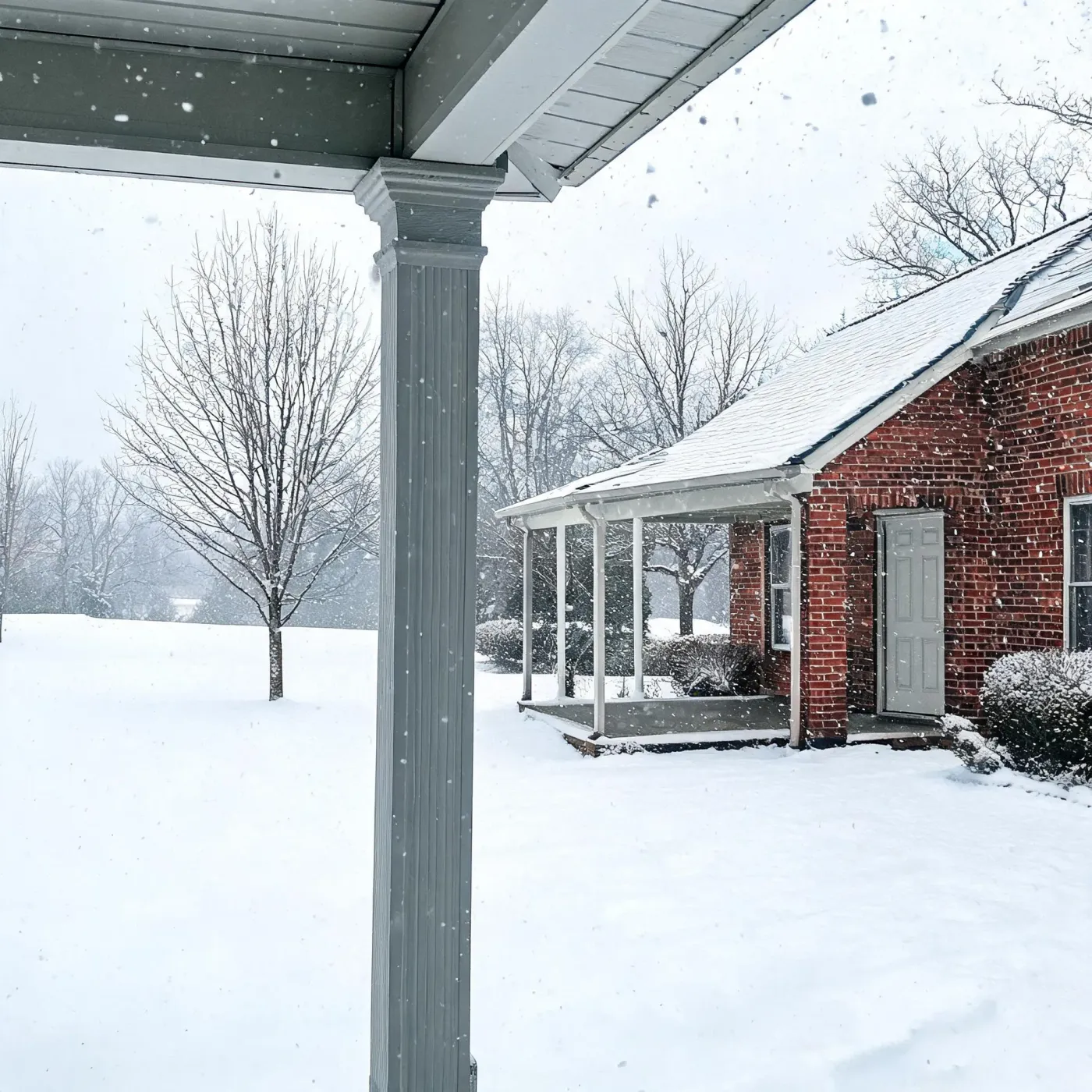
View from under a covered porch with a gray square column toward a red brick house with a white-columned porch and gray door, with falling snow covering the yard, roof, and bare trees.

Winter nights here average 23°F statewide, according to the National Weather Service. That's cold enough for your furnace to run long, frequent cycles to keep up, and a furnace already short cycling has less room to recover between calls for heat. Each restart on a cold night means the blower and igniter are working harder, more often, while the house still feels drafty near the floors and windows. If yours has been clicking on and off, those cold nights are exactly when you'll notice it most, and when putting off a repair costs you the most on your electric bill. Instead of calling around to find someone who can look at it, you can get matched with a contractor who handles this and have them reach out to you directly.

NOAA nClimDiv 1991-2020 county normals weighted by homes

A local pro for your furnace repair

A furnace that keeps shutting off early isn't going to fix itself, and every short cycle this winter is another run at parts that are already struggling, on power that costs more here than almost anywhere else. You could start calling furnace companies around Connecticut yourself, explain the on-off pattern to each one, wait on hold, and sort through whatever quotes come back. Or you could answer a few questions once and let a contractor who works on furnaces like yours reach out to you directly. That's the difference this page offers: not a faster fix, just less of your time spent chasing one down. The furnace still needs a real look, whether it's the filter, the flame sensor, or a limit switch tripping early. Getting that diagnosis started tonight means fewer cold mornings waiting on a fix, and fewer cycles put on parts that are already wearing thin.

What else can trip it

  • The control board counts how many times the furnace fires within an hour, and too many trips a lockout on some models.
  • A pressure switch that won't close keeps the inducer motor running without ever letting the burner light, which can look like short cycling from the next room.
  • Return air that's blocked at a closed vent or a couch pushed against a grille starves the furnace the same way a dirty filter does.
  • Oversized furnaces heat the air near the thermostat fast, satisfy it, and shut off before the rest of the ductwork ever gets warm.
  • A cracked heat exchanger can trip the limit switch on a pattern, since the metal expands as it heats and trips the sensor at roughly the same point each run.
  • The flame sensor has to see a microamp signal from the pilot flame, and a coating of soot on it can drop that signal below what the board accepts.

Not every short cycle starts with a dirty filter or a bad sensor. Your furnace's control board keeps count of how many times it fires in an hour, and on some models, too many starts trips a lockout meant to protect the furnace, not warm the house. A pressure switch that's stuck open will run the inducer motor on and off without ever letting the burner light, and from another room that sounds exactly like short cycling even though gas never ignites. Airflow problems don't always start at the filter either. A vent closed for the winter or a couch blocking a return grille can starve the furnace of air the same way a clogged filter does, and the fix is just as simple once you know where to look. If your furnace is larger than your house needs, it can heat the air right around the thermostat fast enough to satisfy it before the far end of the ductwork ever warms up, so it shuts off early by design, not by failure. A cracked heat exchanger is a harder problem. As the metal heats, it expands, and if the crack sits where the limit switch can sense it, the switch trips at roughly the same point in the cycle every time. And the flame sensor itself needs to pick up a tiny electrical signal, measured in microamps, off the pilot flame. A film of soot on that sensor can drop the signal below what the control board will accept, so the board shuts the gas off even though the flame is burning fine.

Winter nights average 23°F statewide

At 23°F, your furnace can't just take the edge off the air, it has to earn its keep for most of the cycle. A furnace that short cycles never gets that long run, so the house loses ground every time it shuts off early.

NOAA nClimDiv 1991-2020 county normals weighted by homes

A beige high-efficiency furnace stands on a concrete basement floor beside sheet-metal ductwork, with white PVC vent pipes, flexible conduit and copper and steel piping running up a concrete wall to an electrical box.

Normal operation

This furnace fires, runs through its full cycle, and shuts off on its own once the house hits the temperature on the thermostat. The flue and condensate lines stay clear, and the burner gets the time it needs to actually heat the ductwork before it stops.

An older gas furnace with a louvered front panel stands on a concrete basement floor beside large sheet-metal ductwork, a metal flue pipe, copper piping and wood framing.

Short cycling setup

This older furnace sits in a basement with dust built up around its base, a sign of airflow that's been struggling for a while. A unit like this is more likely to short cycle as its igniter, flame sensor, or limit switch wears down and misreads what the furnace is actually doing.

A furnace that short cycles is telling you something specific is wrong, a filter, a flame sensor, a limit switch, a pressure switch, and which one matters because the fix is different for each. Left alone, the parts doing the extra work now are the parts most likely to fail outright later, and that failure tends to land on the coldest night of the year, not a convenient one. You don't have to figure out which part it is yourself, and you don't have to spend an evening calling furnace companies around Connecticut, sitting on hold, explaining the on-off-on pattern to three different people, then lining up their quotes against each other to see who's honest and who's padding the bill. That part of it ends when you ask for help here. What's left is a straightforward call: a licensed contractor who knows what a short-cycling furnace means in a cold Connecticut house gets in touch, looks at what's actually happening in yours, and tells you what it will take to make it stop.

A dark standing-seam metal roof with a stone chimney and metal cap, seen against a backdrop of autumn-colored forest and layered hills under an overcast sky.

Get the right pro for your furnace

Match me with a pro

Asking costs nothing, and the choice to hire stays yours.

Every call you skip making tonight is another cycle your furnace runs on a worn part. One request gets you matched with a contractor who calls you back, so you're not the one explaining the short cycling to three different companies before anyone shows up.