









Why your furnace makes a banging noise in Connecticut

Step 1 of 3: Equipment

A bang when your furnace kicks on usually means delayed ignition. Gas builds up in the burner chamber for a second or two longer than it should, and when it finally lights, it lights all at once instead of catching smoothly. That small explosion is what you hear as a bang. The usual cause is a dirty burner or an igniter that is wearing out and not firing on cue. A bang when the furnace shuts off is different. That's often ductwork popping as it cools and contracts, which is more of a nuisance than a danger. Connecticut winters mean this furnace runs for months at a stretch, so a delayed ignition problem that starts small tends to show up more often as the season goes on, not less. Either way, a banging furnace is worth having looked at before it wears on parts that are more expensive to replace than to catch early.

A smiling bearded man in a dark green hooded jacket and blue t-shirt sits on a couch in a living room with shelves, a potted plant, and a bowl of popcorn on a wooden table.
A smiling man in a green long-sleeved shirt sits on a beige sofa in a living room, with a bowl of popcorn in the foreground, a large potted plant and shelving behind him.
A smiling man in a dark blue T-shirt sits on a couch in a dimly lit living room with a bowl of popcorn and a remote on a wooden table, a lit floor lamp and bookshelves behind him, and windows showing greenery.
A smiling bearded man in a dark green long-sleeved shirt sits on a leather couch in a living room, with a bowl of popcorn and a remote control on a wooden table in the foreground.

Is this bang something you should worry about?

You hear it when the furnace first kicks on, a bang or a thud from somewhere behind the front panel, sometimes loud enough to carry upstairs. It might happen every cycle or just once in a while. Some homeowners notice a faint burnt smell right after, or see a little more soot around the burner when the panel comes off. The noise itself doesn't mean the furnace is about to fail, but delayed ignition puts stress on the heat exchanger every time it happens. Over a Connecticut winter, that's a lot of cycles. Left alone, it's the kind of thing that turns a simple fix into a bigger repair, and it's worth having someone look before it gets there.

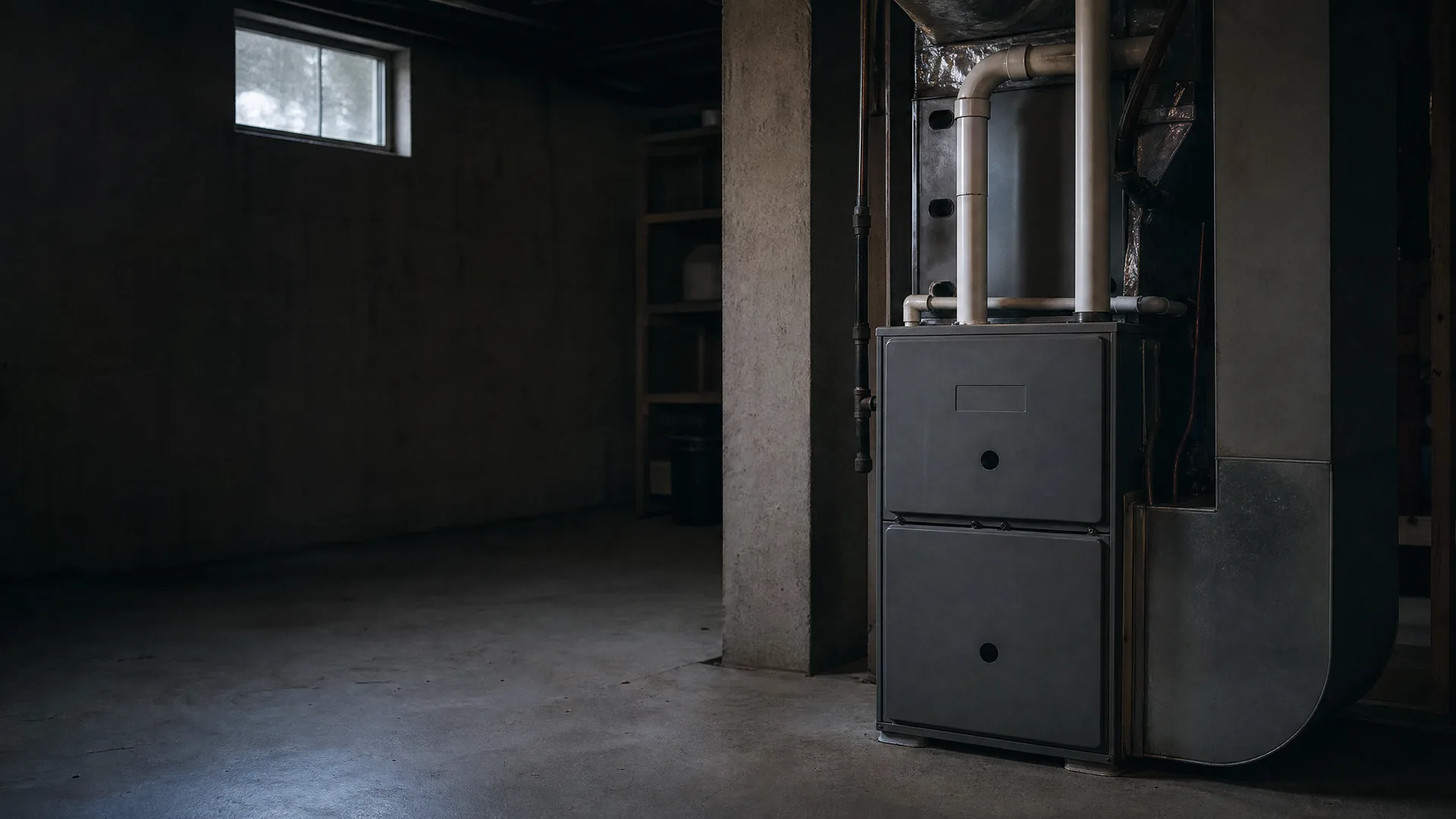
A gray high-efficiency furnace with white PVC vent pipes and attached ductwork stands beside a concrete support column in a dim, empty basement with bare concrete walls and floor and a small window.

It is just past six on a November evening, dark already, and the house upstairs is going quiet for dinner. Down in the basement the furnace sits cold, waiting on the thermostat. A thin haze of dust hangs in the beam of the bare bulb, stirred up from the ductwork nearby. You can hear the floor creak above you, someone walking to the kitchen. The burner hasn't fired yet tonight. When it does, you're standing close enough to hear exactly what happens before it happens, close enough to flinch when the bang comes through the chamber and rattles the panel in front of you.

A basement utility area with a gray furnace, sheet-metal ductwork, pipes, plastic-covered walls, a concrete floor, and a black shelving unit holding storage bins.
A clean burner lights the moment gas reaches it, no delay, no bang, just a steady flame behind the panel.
A gray metal furnace with louvered vent panels stands on a concrete basement floor beside galvanized ductwork, gas and plastic pipes, and foil-faced insulation along the ceiling and wall.
Rust on the cabinet and a yellowed gas line often go with a burner dirty enough to light late and bang.

Your furnace is supposed to light within a few seconds of gas starting to flow, either from a hot surface igniter or a spark. When the burner port is clean, that happens fast enough that the flame catches evenly across the burner, ring by ring, and you never hear it. A dirty or partly clogged port slows that catch down. Gas keeps flowing into the chamber while the igniter or spark tries to get a flame going, so there's more of it sitting there by the time it finally lights. Instead of catching evenly, it all goes at once, and that's the bang. The flame sensor, a short rod mounted near the burner, doesn't cause any of this. Its only job is confirming a flame is present once one exists, so it's not where to look for a delayed ignition problem. If the banging started right after a service visit, the burner probably isn't the issue. That points more toward the igniter itself or how the gas valve is timed. Left unaddressed, those repeated small bangs put stress on the heat exchanger seams, and that's a far bigger job than cleaning a burner.

Why the delay happens

  • Gas furnaces light with a hot surface igniter or a spark, and the burner has to catch within a few seconds of gas flow starting.
  • A dirty or partly clogged burner port slows that catch, so gas pools in the chamber before it finally lights.
  • When it does light, it ignites all the gas at once instead of in a steady ring, and that's the bang you hear.
  • The flame sensor is a separate small rod near the burner that confirms a flame exists, and it has nothing to do with the delay itself.
  • A banging furnace that was recently serviced points more toward the igniter or gas valve timing than toward a dirty burner.
  • Left alone, repeated small bangs can loosen the heat exchanger seams over time, which is a bigger repair than a burner cleaning.
A woman in a dark gray sweater reclines on a light sofa with eyes closed and a slight smile, under a textured gray blanket with an open book resting on her lap, with a lit table lamp and plant in the background.
A smiling bearded man in a navy crewneck sweater sits at a dinner table with a glass of red wine, plates and glasses in the foreground, in a dimly lit room with a lamp and framed picture behind him.
A gray high-efficiency furnace with two white PVC vent pipes stands against sheet-metal ductwork in an unfinished basement with concrete floor and walls and exposed wood joists.

Hand off the furnace problem

One form replaces the calls you'd make to find a furnace pro.

After this form, you can stop searching for a furnace pro.

I'm done searching

There's no charge for the request.

Why does my furnace only bang on the first cold mornings of the year?

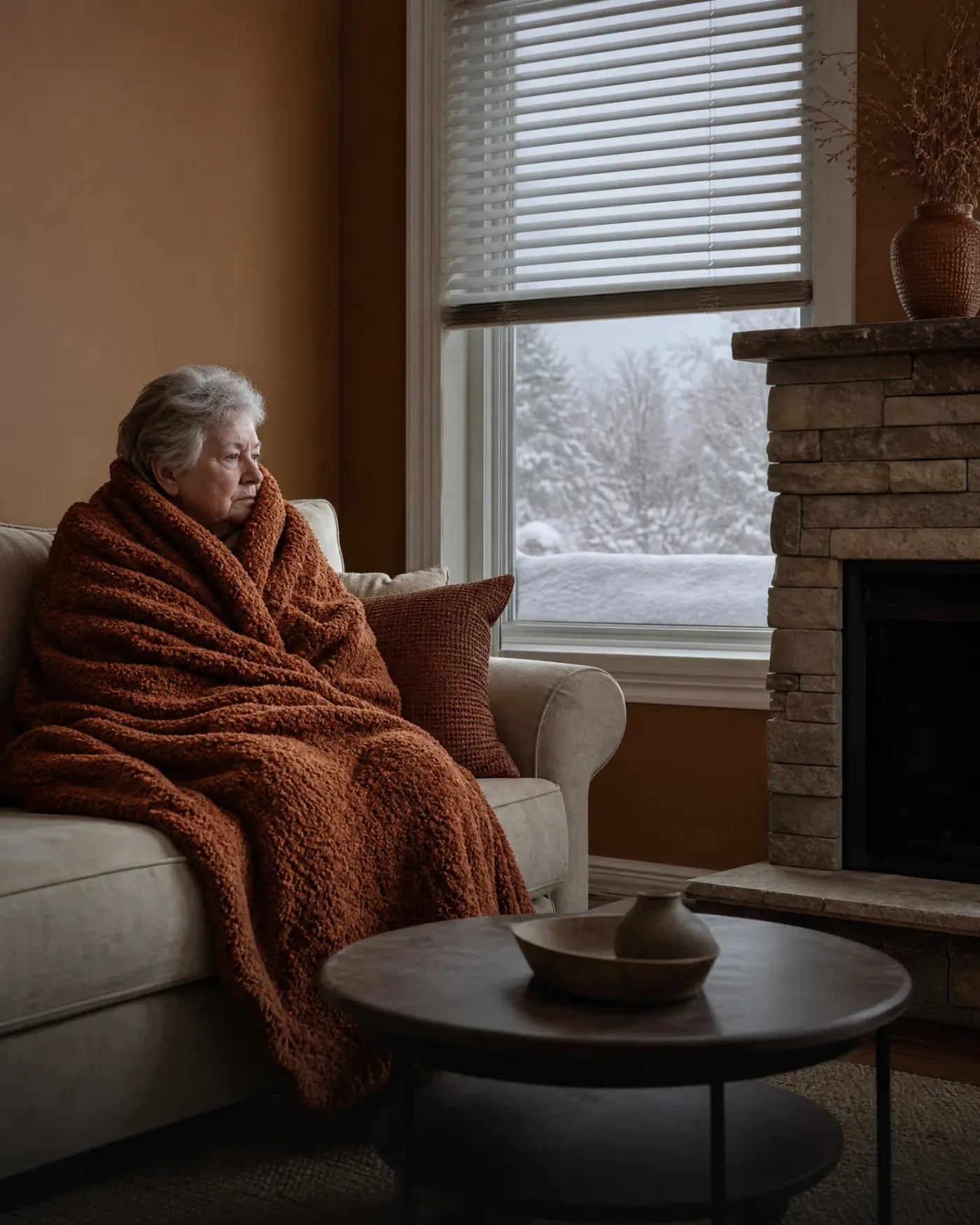
Your furnace sat idle through a warm Connecticut summer and most of the fall. Then the first real cold snap hits, you turn the heat on for the morning, and it bangs. A week later, once it has run a few cycles, the noise is gone. You want to know why that first startup is different from every one after it.

Months of sitting idle let dust and a little rust settle into the burner ports

A furnace that sits unused from April through October collects dust in the burner ports, the small slots gas flows through to reach the igniter. Some rust can form too, especially if the flue or the area around the unit holds any moisture. That buildup slows down how fast gas reaches the flame on those first cold mornings, so it pools for a second longer before it catches, and you get the bang. Once the furnace has run a few cycles, the ports clear themselves and the gas flow evens out, which is why the noise usually fades after the first week of the season. If it keeps banging past that, the buildup is heavier than normal firing clears on its own.

A gray furnace with white PVC vent pipes stands beside sheet-metal ductwork in a basement with a smooth concrete floor, exposed wood framing, and plastic sheeting on the walls.

Running clean

This is what a furnace should sound like on startup: nothing but a soft whoosh as the burner catches right away. No delay, no bang, just heat moving into the ducts above. The cabinet is solid, the pipes are tight, and whatever is lighting that burner is doing its job on time.


A beige furnace with two access panels stands against a concrete basement wall, with galvanized sheet-metal ductwork, a white PVC pipe, flexible conduit and insulated ducting around it.

Running rough

Rust like this on the cabinet usually means years of condensation or a flue problem nobody caught early. A furnace in this shape is more likely to bang, because the same neglect that rusted the metal has probably let the burner get dirty too. Age and wear tend to arrive together.

A closed silver laptop and a ceramic mug of dark coffee sit on a wooden table in front of two chair backs, with a kitchen counter, tiled backsplash, wooden cutting boards, a vase of greenery and a potted plant by a window behind.

What a banging furnace is doing to your house

Every bang is a small shock to the metal around it. The heat exchanger takes that hit cycle after cycle, all winter, and a crack in it is not something you can see or smell early on. By the time it shows up on a technician's inspection, it has usually been forming for a while. Connecticut winters run long, so a furnace that bangs in November is still banging in March, and that is a lot of cycles on the same seam of metal.

You also feel it in the gas bill. A furnace that delays ignition is burning gas before it burns cleanly, and with power and gas costs in this state among the highest in the country, that waste adds up over a season. Finding someone qualified to look at it is its own chore: searching, calling a few numbers, explaining the same bang over the phone more than once, then weighing quotes against each other. Send the form here and that part is done. You just wait for the right person to call.

Interior corner of a room with a window and sheer curtain at left, a gray upholstered sofa with a cushion at right, and a round wooden table holding stacked books and a round vase with an olive branch.
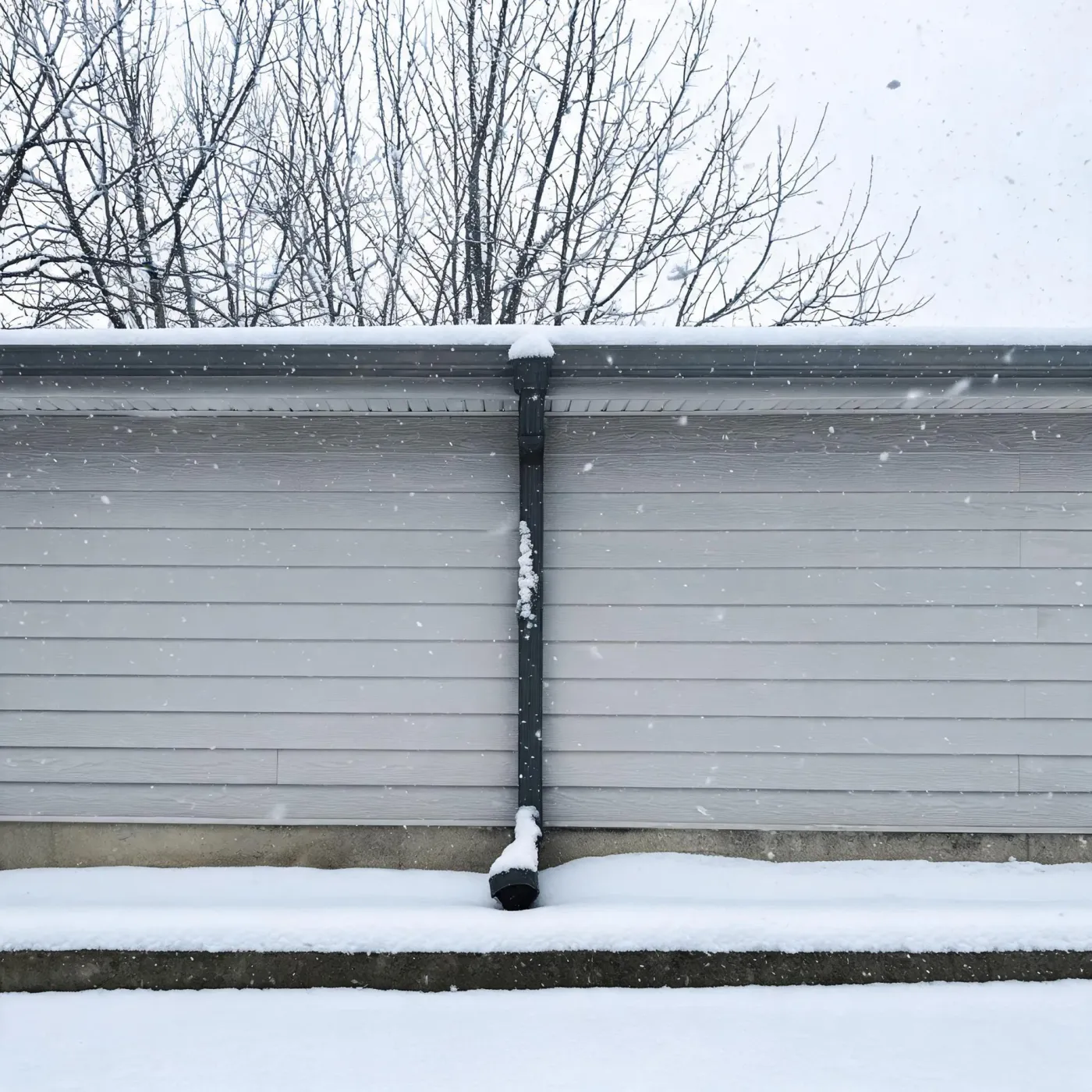
Exterior wall of a building with light gray horizontal siding and a dark downspout running to the ground, with snow on the roofline, steps, and ground, and bare trees behind during falling snow.

Winter nights average 23°F across Connecticut, according to NOAA climate data. That kind of cold keeps a furnace cycling on and off most of the night, and every one of those startups is a chance for a slow-lighting burner to bang. A furnace that only knocks once or twice a week in October can end up banging on nearly every cycle by January, simply because it's firing so much more often. If the noise has been getting more frequent as the nights got colder, that's not your imagination. It's the same problem happening more times a night.

NOAA nClimDiv 1991-2020 county normals weighted by homes

A gas furnace with a louvered upper panel stands on a concrete pad in a basement, flanked by sheet-metal ductwork, white PVC and metal pipes, and insulated columns.
Before you get your furnace repair
A dark high-efficiency furnace on a concrete pad in a basement, connected to galvanized ductwork, white PVC vent pipes, and copper and black gas piping, with concrete walls and wood framing nearby.
After you get your furnace repair

Winter nights average 23°F statewide

At 23°F, your thermostat calls for heat often through the night, not just once. Each call means another startup, and another chance for a slow burner to bang before it catches. A furnace that bangs once a night at that temperature will bang several times.

NOAA nClimDiv 1991-2020 county normals weighted by homes

What the bang comes down to

  • A bang on startup almost always traces back to delayed ignition at the burner, not a one-time fluke.
  • A dirty burner, a weak igniter or a gas valve problem all cause the same delay, and only a look inside tells you which.
  • The bang itself is harmless noise, but the small jolt it sends through the heat exchanger adds up over a winter of cold-night cycling.
  • Connecticut winters mean dozens of startups a night at freezing temperatures, so a furnace that bangs once will bang many more times before spring.
  • Waiting it out doesn't fix a slow-lighting burner, and the fix itself is usually straightforward once a contractor is actually looking at it.
  • The only real unknown left is which part is causing the delay, and that takes a technician in your basement, not more searching online.

A banging furnace almost always has a slow-lighting burner, and the cold is why you hear it so often. Connecticut nights sit around freezing for months, so the thermostat is calling for heat over and over through the night, and every one of those startups is another chance for gas to pool before it catches. Once a furnace does this, it tends to keep doing it, because the dirt, the weak igniter or the gas valve problem behind the delay does not clear up on its own. Each bang is small, but the heat exchanger takes that hit again and again over a winter of cycling, and that is the part worth not ignoring.

Figuring out which of the three is actually at fault means someone has to open the cabinet and look, not guess from a description over the phone. That is the only piece left unresolved here. Everything else about why it happens and why it happens so often in a Connecticut winter is settled.

What this does take off your plate is the work of finding someone to look at it. Instead of searching around for a contractor, calling a few, explaining the same banging noise to each one, and sitting with quotes trying to compare them, you send one form and the search part is done. Someone still has to get into your basement and find the actual part causing the delay, and that part takes a visit, not a search engine. But getting to that visit is the part that usually eats an evening, and that is the part this clears out of your way.

A lit ceramic table lamp with a linen shade sits on a round wooden side table with a small vase of greenery and a dark shallow bowl, beside a beige upholstered sofa with a cushion and knit throw, below a framed artwork on a pale wall.
Corner of a beige linen sofa with a large woven cushion and a fringed knit throw, beside a potted leafy tree in a woven basket against a neutral wall.
Sunlit interior corner with a wood-framed armchair with beige cushions and a striped pillow, a leafy plant in a tall ceramic pot, a window with wood sill showing green foliage outside, and dark wood flooring.
A lit black path light beside a stone walkway leading to a dark front door of a white clapboard house, with shrubs and flowering plants in the bed at dusk.
A covered porch at dusk with a wooden front door, a lit lantern wall sconce on gray horizontal siding, a black rocking chair with a cream throw, a potted white flowering plant, a coir doormat, and a window showing a lit interior lamp.

Let someone else find the pro

Describe what your furnace is doing once, in one form.

Hand it over

You only hire the pro if you want to.