Why your furnace won't shut off in Connecticut

Step 1 of 3: Equipment

A furnace that keeps running usually comes down to a dirty flame sensor, a stuck relay, or a thermostat that's lost track of the temperature. The flame sensor tells the control board the burner is lit. When soot coats it, the board can't read it right and keeps calling for heat even after your house is warm. A stuck relay on the control board does the same thing from a different angle, holding the circuit closed so the blower or burner never gets the signal to stop. Through a Connecticut winter, with the furnace running for hours at a stretch, these parts wear faster than they would running only a few weeks a year. Left alone, a furnace that won't shut off burns more gas than it should and puts more strain on the blower motor and heat exchanger. It is not a problem that clears up on its own, and it is worth having someone look at the sensor and the board before it leaves you with a bigger repair.

A gray high-efficiency furnace with white PVC vent pipes stands against a concrete basement wall beside sheet-metal ductwork, a small condensate pump on the floor, and exposed wood framing at left.

Furnace cycling normally

A furnace that's running right fires up, satisfies the thermostat, and shuts off. You'd see this kind of setup in a mechanical room with the flue, the ductwork, and the condensate pump all doing their job quietly. It starts, it runs, it stops. Nothing lingers.

A gray sheet-metal furnace with flue pipe and adjacent ductwork stands against a stone basement wall on a concrete floor, with white PVC and metal pipes running nearby.

Furnace stuck running

This is the furnace that won't quit. It keeps firing past the point where your house is warm enough, and the blower keeps pushing air long after it should've cut out. In an older block-wall basement like this one, that strain shows up fast in the gas line and the burner.

Running Nonstop: Harmless or Not

Keeps running, heat is working

  • The blower keeps blowing warm air and the rooms are getting to temperature even though the furnace won't shut off on its own.
  • A stuck relay or a thermostat that's not reading the room right can keep calling for heat after the house is warm enough.
  • This usually means higher gas and electric use that shows up on next month's bill, not a furnace about to fail.
  • A contractor can often find this with the thermostat wiring and the relay without pulling the furnace apart.
  • Turning the thermostat down or switching the system off at the switch stops it for the moment, but the cause is still there.

Keeps running, heat isn't right

  • The furnace runs and runs but the air coming out is lukewarm, or some rooms never catch up.
  • A dirty flame sensor can let gas flow without the board sensing a steady flame, so the burner cycles oddly while the blower keeps going.
  • This points to a problem at the burner or the heat exchanger rather than the thermostat or the wiring.
  • Left alone, a furnace working this hard for this little heat is a bigger repair than one caught early.
  • This is worth a same-week call rather than waiting, especially with Connecticut winters ahead.
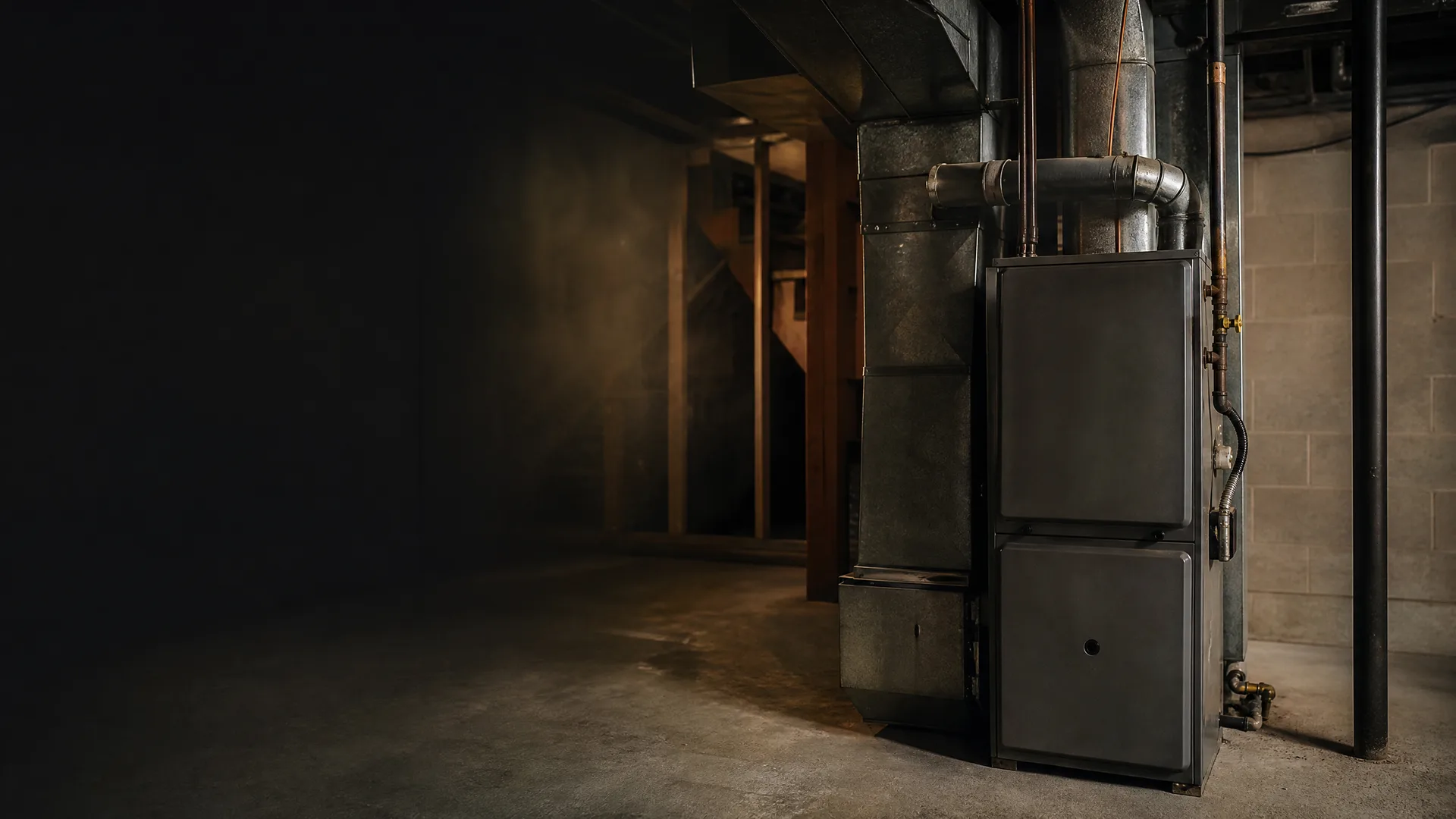
A furnace with sheet-metal ductwork and copper piping stands against a concrete block wall in a dim basement with a bare concrete floor.

You're down in the basement around seven, after the dishes, to grab something off the shelf by the furnace. It's dark down there except the bulb over the stairs, and the air feels still and a little dusty near the unit. The furnace isn't running. No hum, no blower, nothing. You put your hand near the vent and there's no warmth coming up, and the metal cabinet is cold to the touch. Upstairs the thermostat still reads low, still calling for heat, but down here nothing's answering. You can see a thin film of dust sitting on top of the burner compartment where the access panel meets the frame.

A gray gas furnace stands on a concrete basement floor, connected to sheet-metal ductwork, white PVC vent pipes, and a yellow gas line, with plastic sheeting covering the walls.
A newer furnace with a clean flame sensor and a board that's reading the thermostat right will cycle on, heat the house, and shut off on its own.
A metal furnace with louvered panels stands against a concrete basement wall, connected to sheet-metal ductwork and a round flue pipe, with wooden framing posts and a pipe nearby.
Years of dust in an older cabinet can throw off that sensor, and a furnace that's run hard all winter is more likely to stick on and keep burning gas.

A furnace doesn't just run until it feels like stopping. The thermostat closes a circuit, the board picks it up, and that circuit stays closed until the room hits the set temperature. The board also needs proof the burner actually lit, and that proof comes from a thin rod sitting right in the flame, sending back a small signal. Dust or corrosion on that rod weakens the signal enough that the board can read a lit burner as unlit, and it keeps calling for more heat. Sometimes the board itself is the problem. A relay inside it is a switch, same as a light switch, except electricity throws it instead of your hand. If the contacts fuse shut, the board can't open that circuit even after the room is warm. Not every long cycle means trouble, though. Variable-speed blowers are built to run longer at lower speeds, and a slow ramp-down can look like a furnace that won't quit. And the thermostat has its own sensor, which can drift or sit in a drafty spot and report the room as colder than it is.

How the furnace decides to stop

  • When the thermostat calls for heat, it closes a circuit that tells the control board to start the sequence, and the board holds that circuit open until the room reaches the set temperature.
  • The flame sensor is a thin rod sitting in the burner flame, and it works by sending a tiny signal back to the board confirming combustion is actually happening.
  • A relay inside the board is just a switch controlled by electricity rather than your hand, and if its contacts fuse together, the board can't open that circuit even after the thermostat is satisfied.
  • Dust and corrosion on the flame sensor change the signal strength it sends, and a weak enough signal can make the board misread a lit burner as unlit.
  • Furnaces with variable-speed blowers run longer, lower cycles by design, so what looks like a furnace that won't stop may be the blower finishing its programmed ramp-down.
  • The thermostat itself has a temperature sensor inside it, and if that sensor drifts or sits somewhere drafty, it can keep reporting a room as cooler than it actually is.
An older metal furnace with PVC and metal pipes stands on a concrete basement floor beside galvanized ductwork, with wooden stairs and a water tank in the background.
Before you get your furnace repair
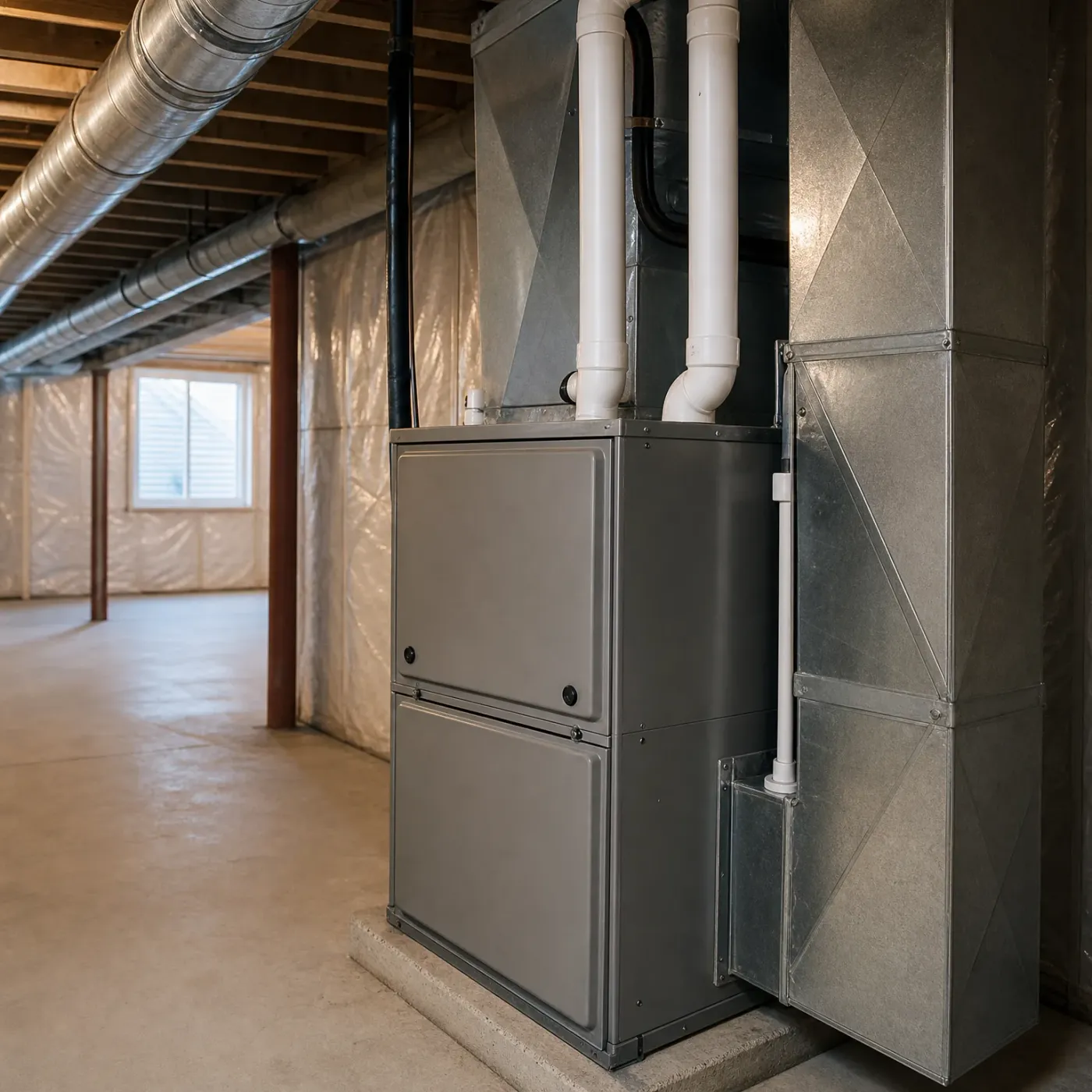
A gray high-efficiency furnace in a basement with sheet-metal ductwork, white PVC vent pipes, metal plumbing lines, a condensate pump on the floor, and a window showing green trees outside.
After you get your furnace repair
A gray high-efficiency furnace on a concrete pad in an unfinished basement, with white PVC vent pipes, galvanized sheet-metal ductwork, insulated walls and a small window in the background.

Get the right pro for your furnace

Answer a few questions instead of calling shop after shop.

Say what's going on with your furnace, and a pro who works on them reaches out.

Describe it once

There's no charge for the request.

A smiling woman with dark shoulder-length hair in a cream V-neck sweater sits at a marble counter with a glass of red wine, with a kitchen and softly lit living room behind her.
A woman in a dark green sweater laughs while seated at a marble kitchen island with a glass of red wine, with open shelving, cabinets and a living room visible behind her.
A woman with long dark hair in a cream knit sweater laughs while looking off to the side, seated at a counter with a glass of red wine, in a dimly lit living room with a sofa, lamp, framed pictures and houseplant behind her.
A smiling woman with long dark hair in a beige sweater sits at a marble kitchen counter with a glass of red wine, with a dimly lit living room behind her.

One flame sensor, one job

The rod sits in the flame and proves the burner is lit. A film of soot on it is enough to make the board misread the signal and keep the gas valve open.

Start one form

A furnace that won't quit raises your bill every day it runs long

Connecticut power rates are among the highest in the country, so a furnace that overruns costs you more every single day it does it.

Start one form

Winter nights average 23°F statewide

At 23°F, a furnace that won't shut off is burning gas to fight a cold it already beat ten minutes ago. Your rooms hit temperature, then it runs again anyway. Over a Connecticut winter night that adds up fast on the bill.

NOAA nClimDiv 1991-2020 county normals weighted by homes

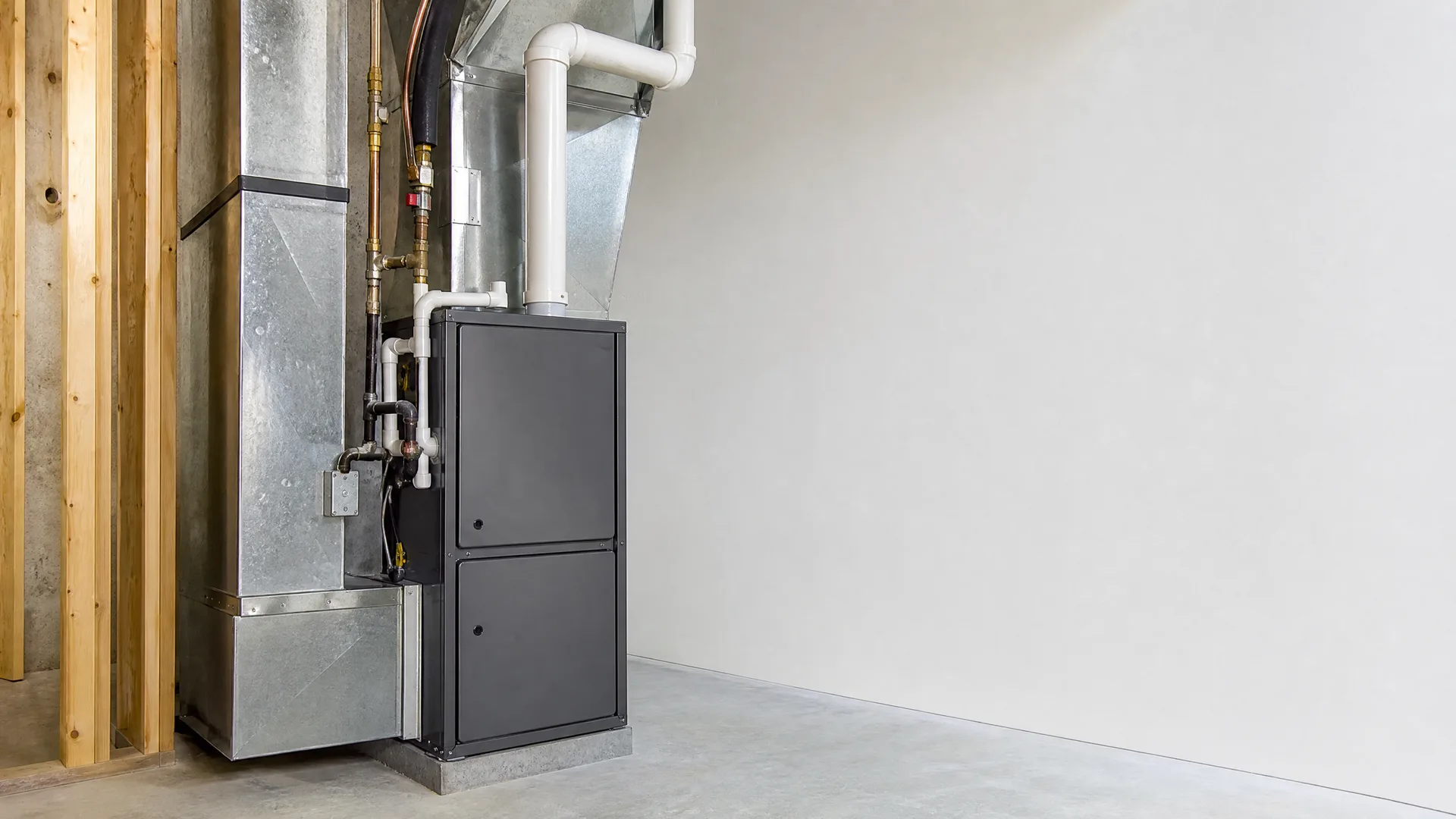
A dark gray furnace connected to galvanized sheet-metal ductwork, white PVC vent pipes and copper piping, standing against a plain light wall in a room with a bare concrete floor and exposed wood framing at left.

Living with it until spring

You could leave it alone and just watch the thermostat, turning the furnace off at the switch when a room gets too warm and back on when it cools. That works, for a while. It means checking rooms you wouldn't normally think about, and it means your gas burner is still firing more than it should every time you forget to catch it. Connecticut winters run long enough that this adds up over weeks, not days.

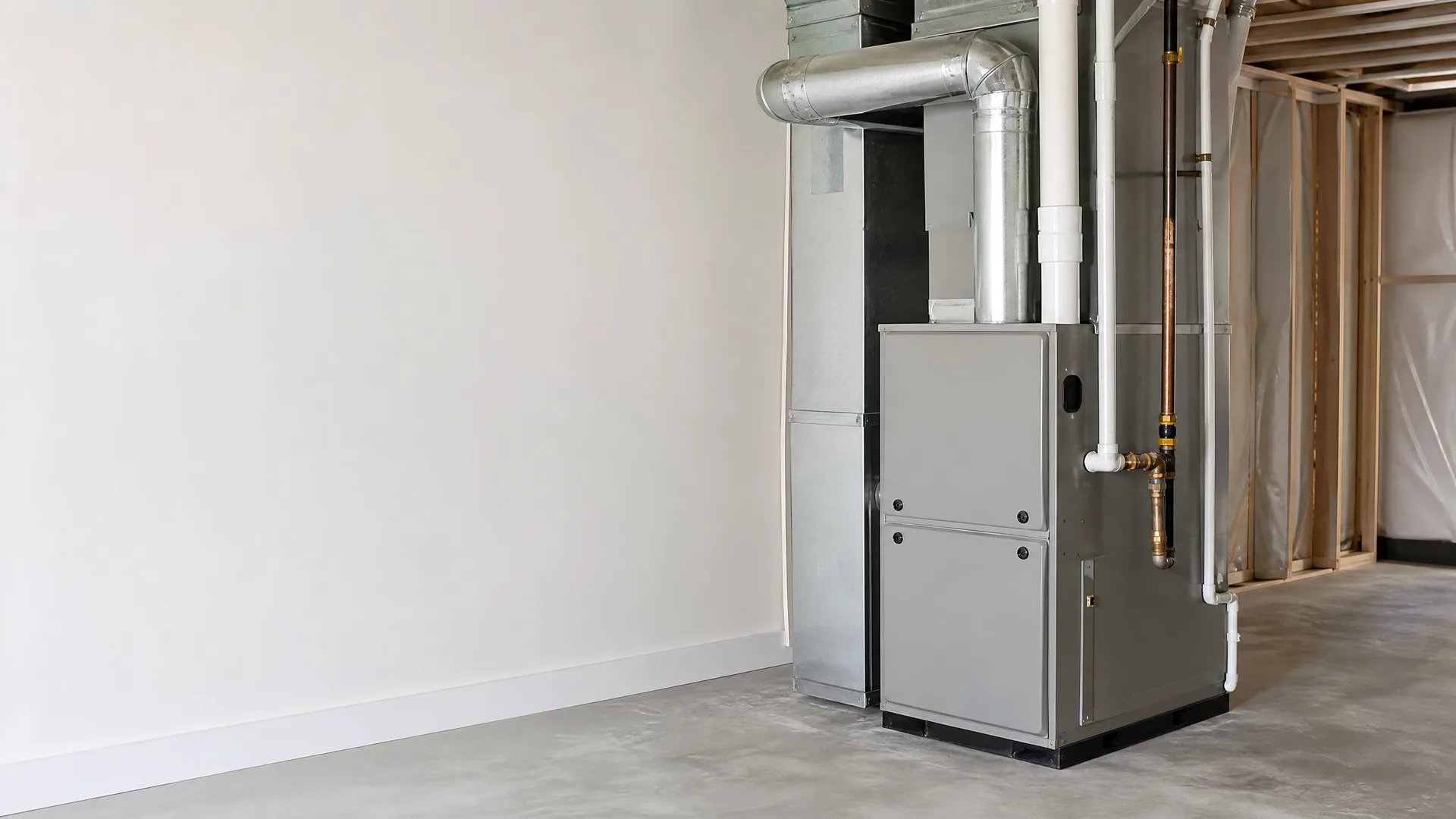
A gray high-efficiency furnace with sheet-metal ductwork, white PVC vent pipes and copper piping stands against a wall in an unfinished basement with a concrete floor and insulated wood stud framing at right.

Getting it looked at now

A contractor can test the flame sensor, the relay, and the thermostat's wiring to find which one is actually failing, instead of you guessing at a switch. That means not spending more evenings calling around for someone who answers the phone, explaining the same problem twice, and comparing quotes that may not even cover the same work. You get matched with someone who takes on your specific furnace and reaches out directly.

How do I know if it's the flame sensor or the thermostat?

You've already checked the flame sensor theory in your head, but you want to know which one it actually is before anyone touches your furnace. Both problems make the furnace run long, so the symptom alone doesn't tell you much. There's a way to narrow it down just by watching how the furnace behaves over one cycle, and it doesn't take any tools.

Watch the flame when the furnace finally shuts off

If the burner flame flickers or looks weak and orange instead of steady blue right before shutoff, that points to the flame sensor losing its signal under a coat of soot. If the flame stays strong and even the whole time and the furnace just won't stop even after every room feels warm, that points to the thermostat, either a bad reading of the room or a relay stuck closed somewhere behind it. Another check: if turning the thermostat down a few degrees doesn't shut the furnace off right away, the board isn't getting that message, which lands back on the thermostat or its wiring rather than the sensor.

A bearded man in a dark navy sweater over a collared shirt smiles and looks off to the side while seated at a dinner table with a glass of red wine, a lit candle, and a plate of food in the foreground of a dimly lit room.
A woman in a dark gray sweater reclines on a couch with her eyes closed and a knit blanket over her lap, an open book resting face-down in front of her, with a lit table lamp and shelving blurred in the background.
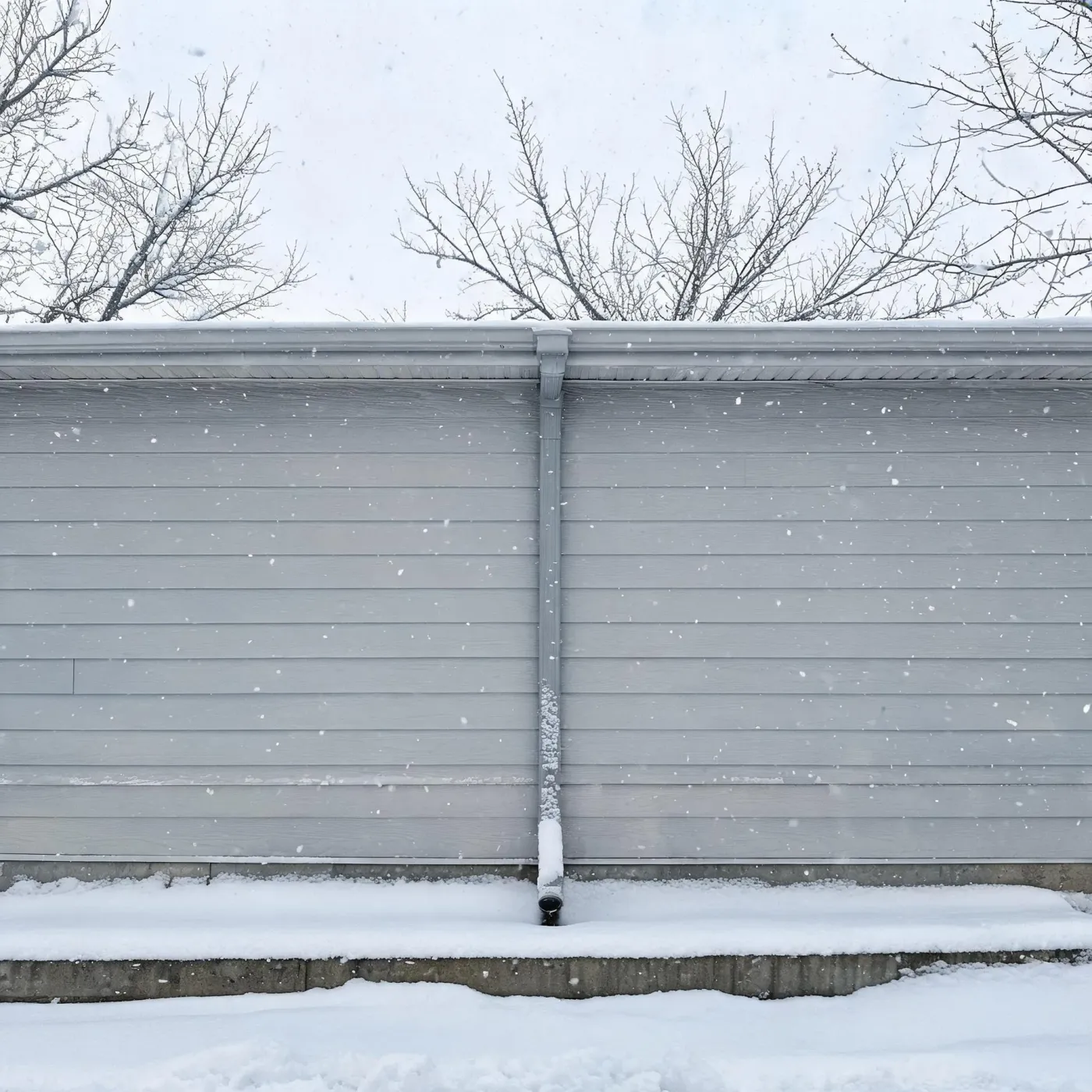
Gray horizontal lap siding on a building wall with a central downspout, seen during falling snow, with snow-covered ground and bare tree branches above the roofline.

Winter nights average 23°F statewide, according to NOAA climate data. That's cold enough that your thermostat calls for heat most of the night without a break, and a furnace that's slow to shut off gets more chances to run long before morning. You'd notice it as a mechanical room that never really goes quiet, or a bedroom near the ductwork that's warmer than you set it. The colder the night, the more a stuck relay or a dirty flame sensor costs you, because the burner has more reason to fire and less reason, as far as the board can tell, to stop.

NOAA nClimDiv 1991-2020 county normals weighted by homes

A woman stands in the open doorway of a white stucco house holding the dark door, facing a man in a black cap and shirt seen from behind in the blurred foreground, with a potted flowering plant beside the entry.

A furnace that won't shut off has one of a few causes

A dirty flame sensor, a stuck relay, or a thermostat that can't read the room right. All three keep the burner going past the point where it should have stopped, and all three cost you on a Connecticut winter bill while they go unfixed. None of them get better by waiting.

What you don't have to do is figure out which one it is yourself, then find someone who can look at it. Getting matched means skipping the calling around, the retelling of what the furnace is doing every time you reach a new person, and the back and forth of comparing quotes from contractors you don't know yet. A contractor who works on furnaces like yours gets your situation and reaches out to you directly. You still have a furnace that needs a look. You just don't have to spend another evening finding someone to give it one.

A dark ceramic mug on a round wooden table beside a light grey sofa with a woven cushion and knit throw, with a window, potted plant, floor lamp and wooden cabinet blurred in the background.
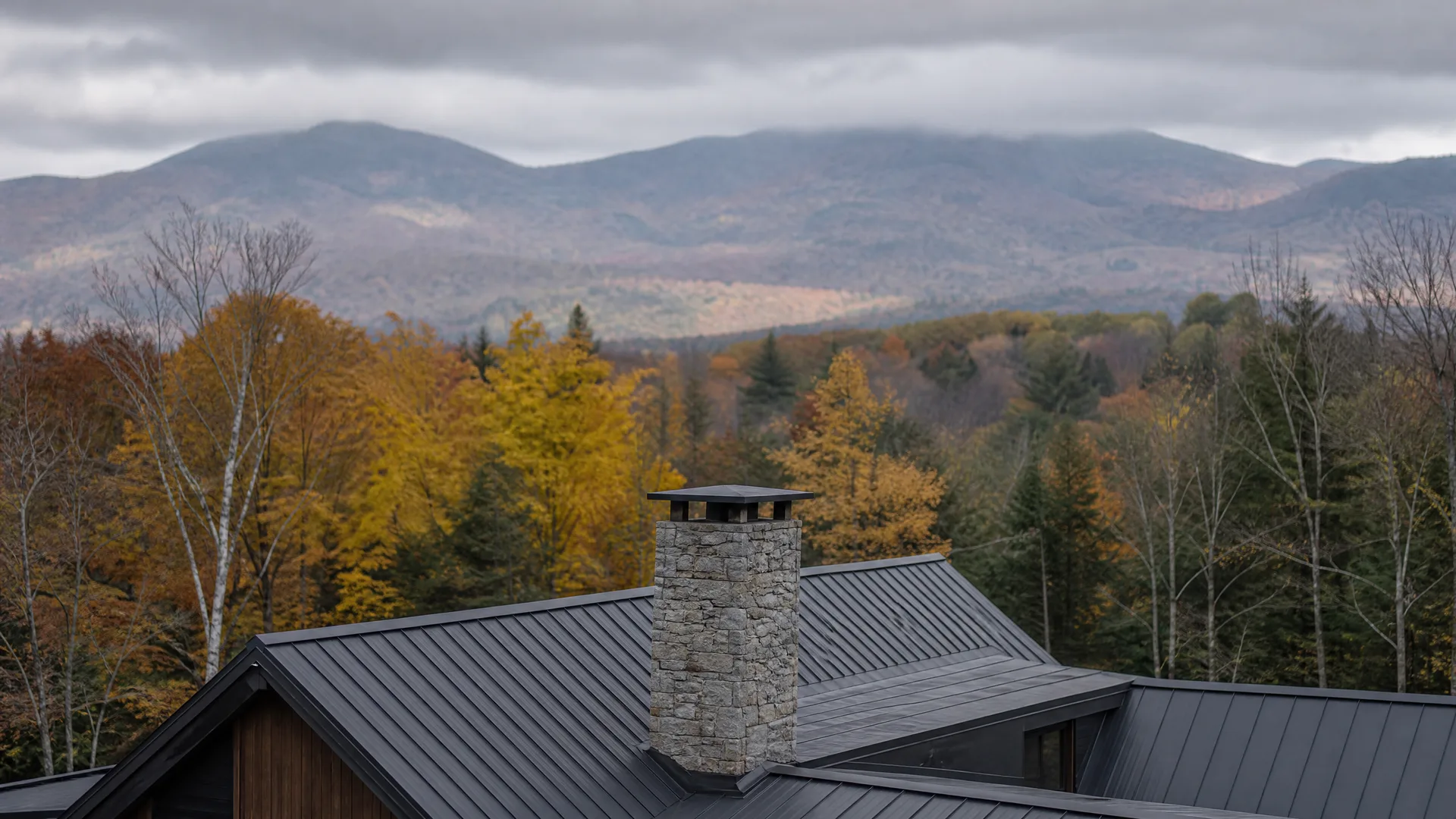
A dark standing-seam metal roof with a stone chimney in the foreground, backed by mixed forest in autumn color and cloud-covered mountain ridges under an overcast sky.

Get your furnace to the right pro

Skip calling around

Asking costs nothing, and the choice to hire stays yours.

You could keep resetting the switch and watching the thermostat yourself, or you could send the request and let a contractor who knows these furnaces take it from here, no calling around, no explaining the flame sensor story twice.