Tell us about the job
Takes about a minute. No obligation.
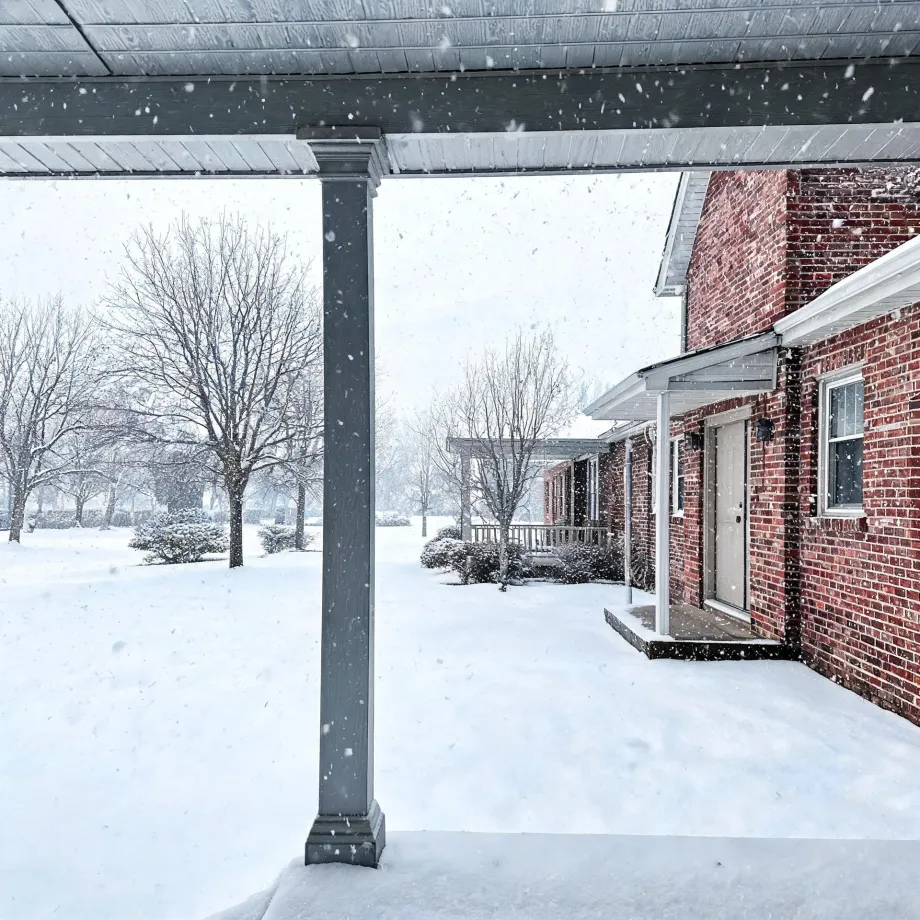
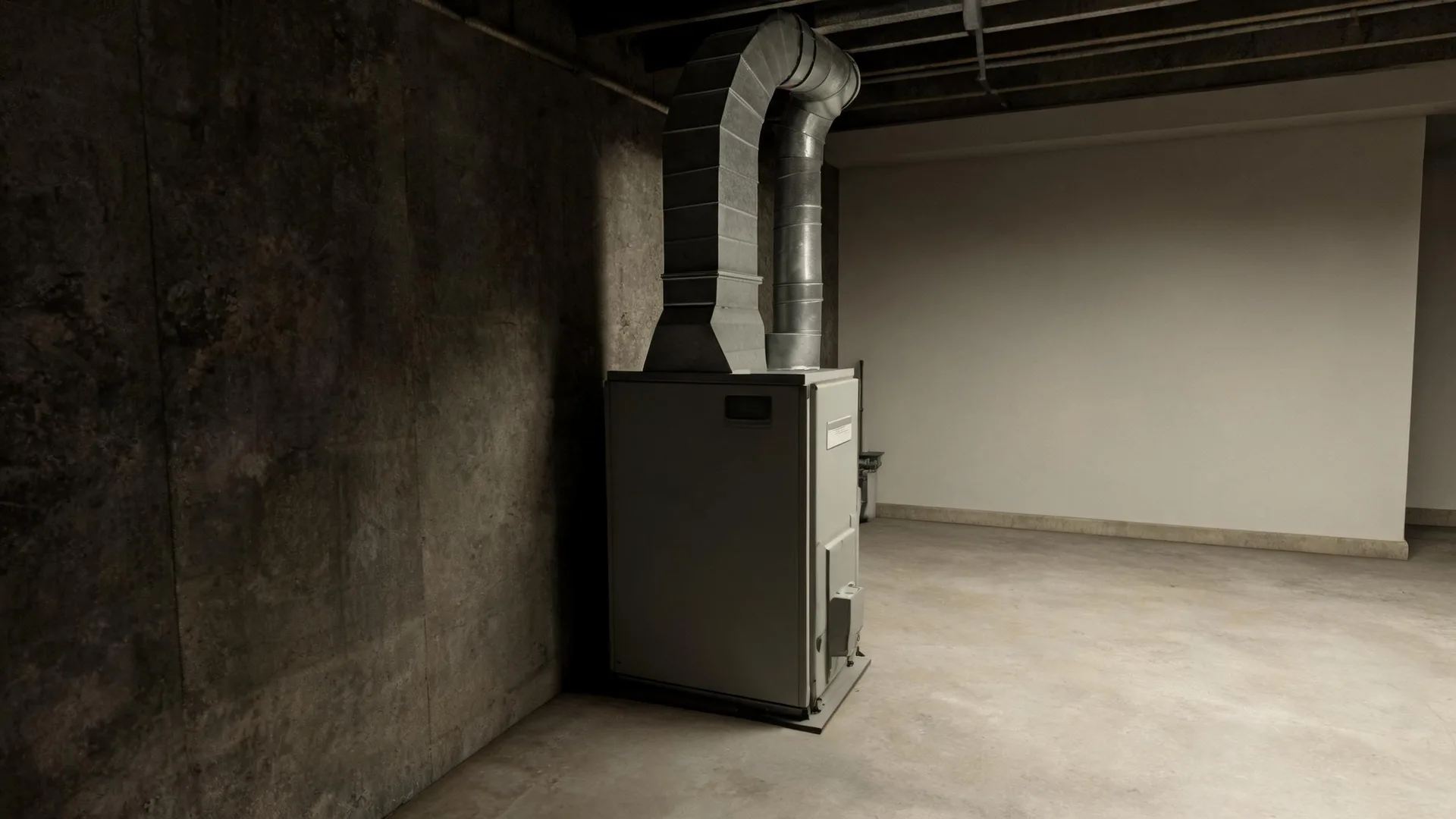
A contractor quoting a furnace installation here has to treat sizing as a local question, not a standard one. Homes in South Central Connecticut Planning Region, CT run heat about eight months a year, from October through May. The burner and ignition system cycle through that entire stretch, and a unit that is undersized for the house it serves accumulates wear on those components faster than the calendar alone suggests. The heat exchanger carries the load every time the furnace fires, and a poor install leaves it working harder than a correct one would. Contractors check that the equipment matches the actual heat loss of the house before anything else gets priced.
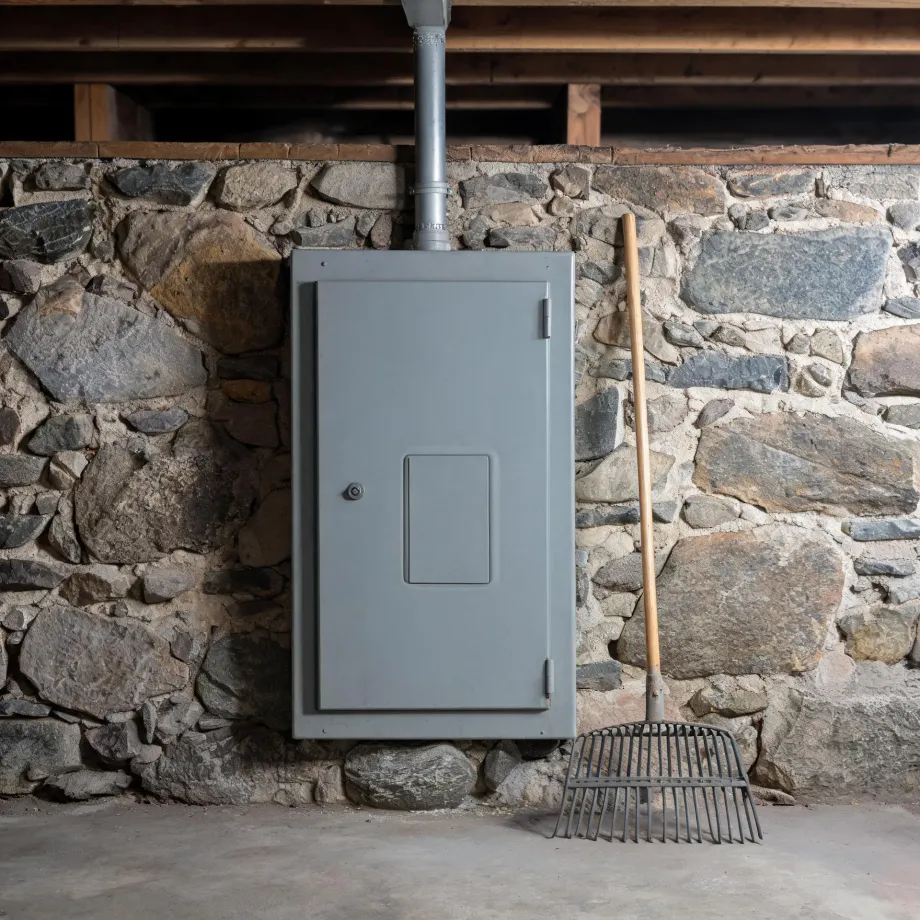
Ductwork designed for a different system is the first thing a contractor has to evaluate before a furnace installation in this region can be priced or planned. Half the homes in South Central Connecticut Planning Region, Connecticut were built in 1964 or earlier (2020-2024 ACS 5-year). That puts a large share of the housing stock in a range where original trunk lines, branch runs, and returns were sized for equipment whose airflow and static pressure requirements differ from what a new furnace demands. If the existing duct layout cannot carry what the new unit needs, the installation scope grows before the furnace itself is even ordered. Electrical service gets checked alongside it, because the panel has to support the load the new equipment draws.
What Gets Installed With a New Furnace
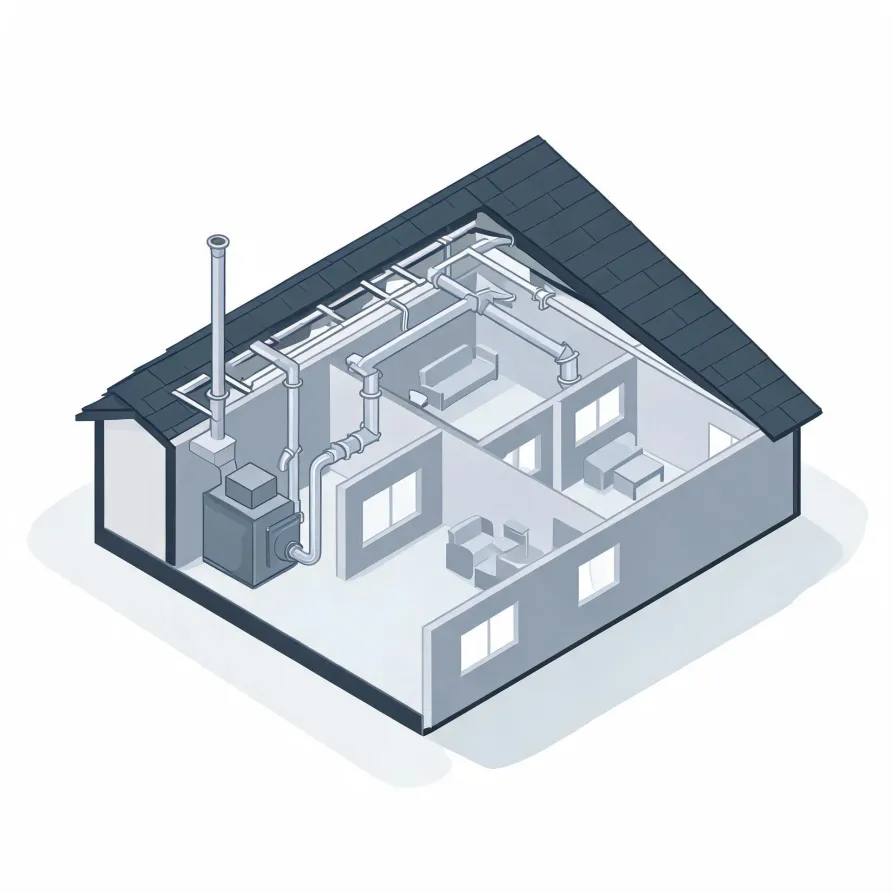
The furnace itself sits in a mechanical room, basement, or utility closet and burns fuel to produce heat. Attached directly to it, the air handler moves conditioned air into the duct system. The flue pipe runs from the furnace to an exterior wall or roofline, carrying combustion gases out of the house.
The thermostat mounts on an interior wall and tells the furnace when to fire and when to stop. A contractor also installs the gas line connection at the furnace and fits a condensate drain if the unit is a high-efficiency model that produces moisture during operation.
The drawing shows a typical layout, and a licensed contractor determines exactly what applies to your house.
Find a contractor in South Central Connecticut Planning RegionSouth Central Connecticut Planning Region, by the numbers
Half the homes in South Central Connecticut Planning Region, Connecticut were built in 1964 or earlier (2020-2024 ACS 5-year).
U.S. Census Bureau, 2020-2024 American Community Survey 5-Year EstimatesSouth Central Connecticut Planning Region, Connecticut holds 248,267 housing units (2020-2024 ACS 5-year).
U.S. Census Bureau, 2020-2024 American Community Survey 5-Year EstimatesOwners occupy 60.5% of the occupied homes in South Central Connecticut Planning Region, Connecticut (2020-2024 ACS 5-year).
U.S. Census Bureau, 2020-2024 American Community Survey 5-Year EstimatesFurnace Installation Rules for South Central Connecticut Planning Region, Connecticut5 codes, standards, and licensing rules
What happens once a contractor is on the job
Non-weatherized gas furnaces manufactured on or after November 19, 2015 must reach 80.0 percent AFUE.
Non-weatherized oil-fired furnaces manufactured on or after November 19, 2015 must reach 83.0 percent AFUE.
Mobile home gas furnaces manufactured on or after November 19, 2015 must reach 80.0 percent AFUE.
Non-weatherized gas furnaces manufactured on or after December 18, 2028 must reach 95.0 percent AFUE, up from the 80.0 percent minimum that applies to units manufactured before that date.
What South Central Connecticut Planning Region, Connecticut Requires for HVAC Work
Connecticut requires a state licence to perform, or to advertise, heating, piping and cooling work: no person may practise an occupation this chapter covers without first obtaining one.