Tell us about the job
Takes about a minute. No obligation.
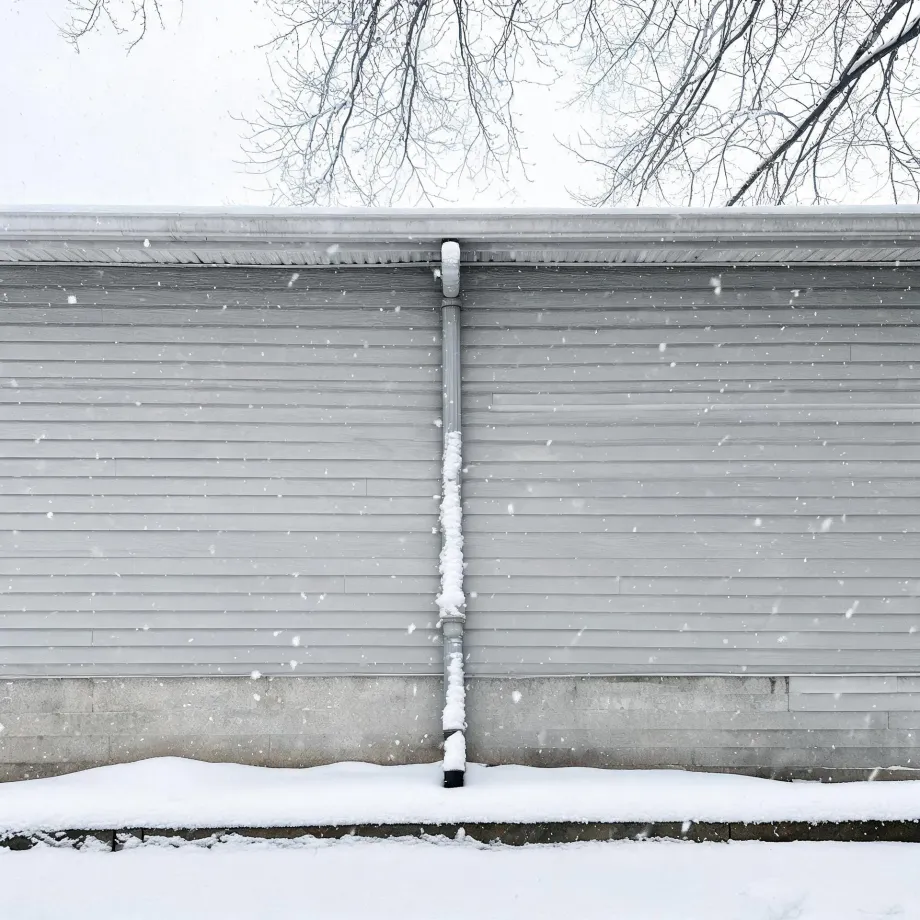
A furnace quote in this area has to get the load calculation right before anything else, because the heat exchanger and burner will spend most of the calendar cycling, not sitting. Homes in Lower Connecticut River Valley Planning Region, CT run heat about eight months a year, from October through May. An undersized unit that runs long cycles compounds wear on the ignition system and the heat exchanger faster than a correctly sized one, and a poorly sealed duct run bleeds conditioned air through the same stretch. Contractors sizing a replacement here treat duct condition and envelope tightness as part of the install scope, not optional follow-up work.
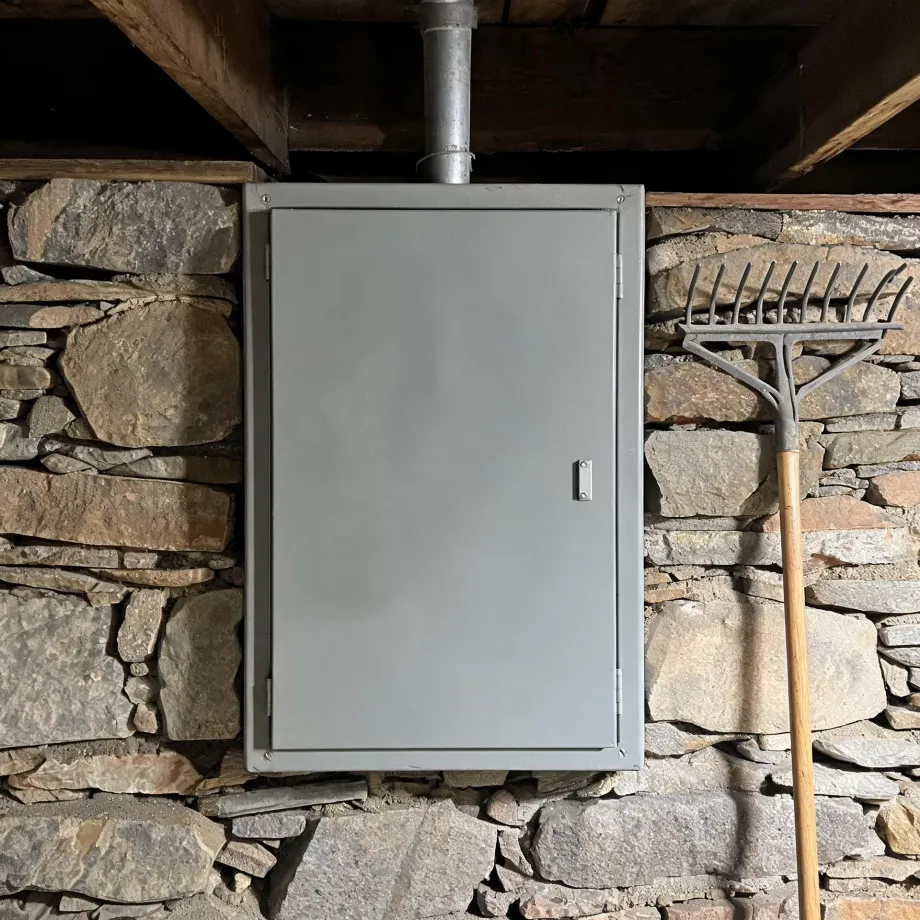
Ductwork that predates the furnace it now serves by a generation or more was laid out for different equipment, different static pressures, and different load calculations than what a contractor brings to the job today. Half the homes in Lower Connecticut River Valley Planning Region, Connecticut were built in 1972 or earlier (2020-2024 ACS 5-year). That gap is where installation scope is actually decided: a run that looks adequate on a drawing can prove undersized once a contractor measures what the new unit will push through it, and tearing into finished walls to resize it changes both the timeline and the price. The electrical side carries its own version of the same question, since panels in housing of this vintage were not specified with a modern furnace's draw in mind.
What Gets Installed With a New Furnace
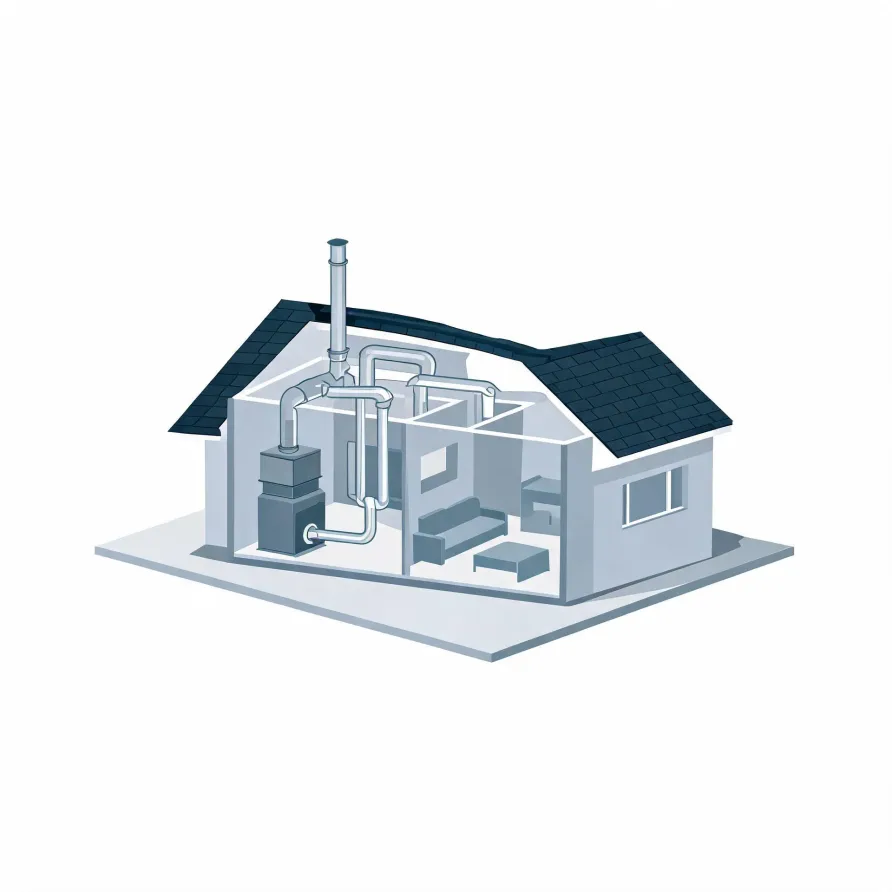
The furnace itself sits in the basement, utility room, or mechanical closet and is the unit that generates heat. Attached directly to it is the air handler, which pushes conditioned air through the house. A new installation also includes the flue or venting assembly, which runs from the furnace to an exterior wall or the roofline and carries combustion gases out.
The thermostat mounts on an interior wall and serves as the control point for the whole system. A contractor also installs or replaces the filter housing and the plenum, the short chamber that connects the furnace to the supply duct runs above it.
The drawing shows a typical layout, and a licensed contractor determines exactly what applies to your home.
Find a contractor in Lower Connecticut River Valley Planning RegionLower Connecticut River Valley by the Numbers
Half the homes in Lower Connecticut River Valley Planning Region, Connecticut were built in 1972 or earlier (2020-2024 ACS 5-year).
U.S. Census Bureau, 2020-2024 American Community Survey 5-Year EstimatesLower Connecticut River Valley Planning Region, Connecticut holds 82,963 housing units (2020-2024 ACS 5-year).
U.S. Census Bureau, 2020-2024 American Community Survey 5-Year EstimatesOwners occupy 75.8% of the occupied homes in Lower Connecticut River Valley Planning Region, Connecticut (2020-2024 ACS 5-year).
U.S. Census Bureau, 2020-2024 American Community Survey 5-Year EstimatesFurnace Installation Rules on the Books for Lower Connecticut River Valley Planning Region, Connecticut5 codes & standards
What the Installation Actually Looks Like
Non-weatherized gas furnaces manufactured on or after November 19, 2015 must reach 80.0 percent AFUE.
Non-weatherized oil-fired furnaces manufactured on or after November 19, 2015 must reach 83.0 percent AFUE.
Mobile home gas furnaces manufactured on or after November 19, 2015 must reach 80.0 percent AFUE.
Non-weatherized gas furnaces manufactured on or after December 18, 2028 must reach 95.0 percent AFUE, up from the 80.0 percent minimum that applies to units manufactured before that date.
Licensing and Legal Requirements in Lower Connecticut River Valley Planning Region, Connecticut
Connecticut requires a state licence to perform, or to advertise, heating, piping and cooling work: no person may practise an occupation this chapter covers without first obtaining one.