Tell us about the job
Takes about a minute. No obligation.
Sizing a furnace for a Naugatuck Valley home starts with what the burner is actually asked to do each year. Homes in Naugatuck Valley Planning Region, CT run heat about eight months a year, from October through May. That cycling load falls on the heat exchanger and the ignition system in particular: two components that tolerate a sloppy install or a marginal equipment choice far less forgivingly when they rarely get time off. A contractor who quotes without a proper load calculation leaves the homeowner with a system that either short-cycles through the shoulder months or runs continuously through the coldest ones, and either pattern accelerates wear on the same parts.
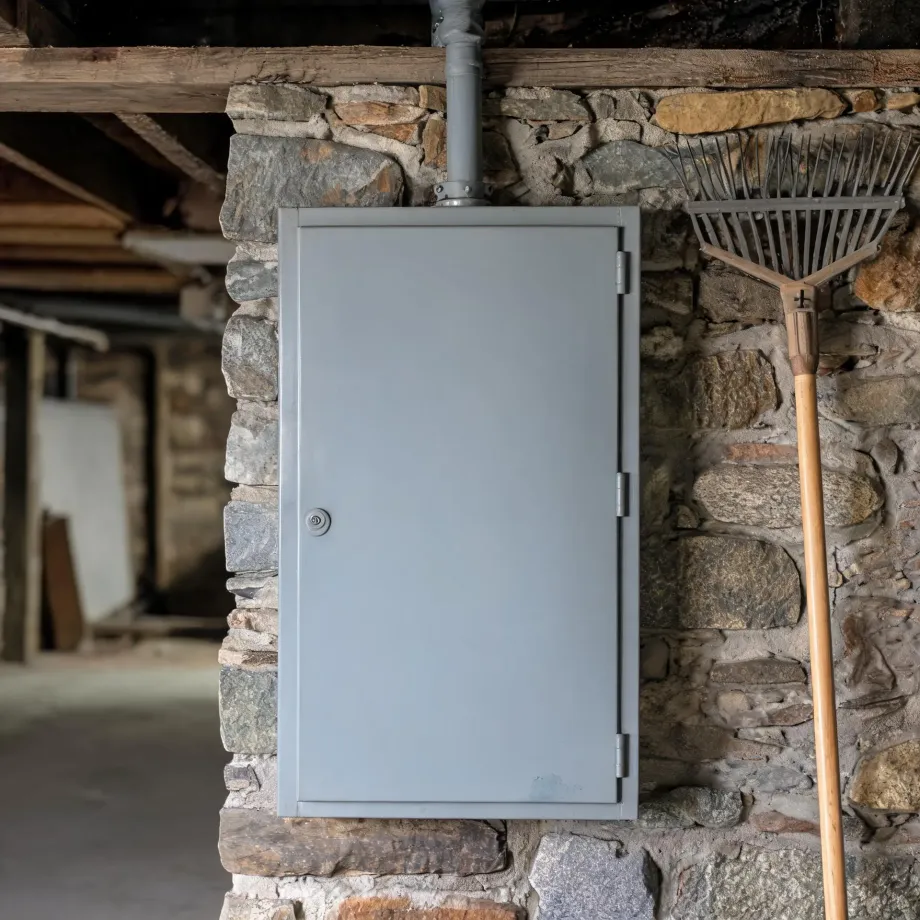
Ductwork in the older half of Naugatuck Valley's housing stock was laid out for equipment that is long gone, and each successive furnace installed since then was fitted around what was already there rather than what the house ideally needed. Half the homes in Naugatuck Valley Planning Region, Connecticut were built in 1969 or earlier (2020-2024 ACS 5-year). That history of adaptation means the ductwork a contractor finds today reflects a series of compromises built up over time, and whether those runs can carry a new system without rework is the question that shapes the whole job. The electrical service matters too: load requirements for modern furnaces differ from what older panels were configured for, and a contractor has to check both before any equipment selection makes sense.
What Gets Installed With a New Furnace
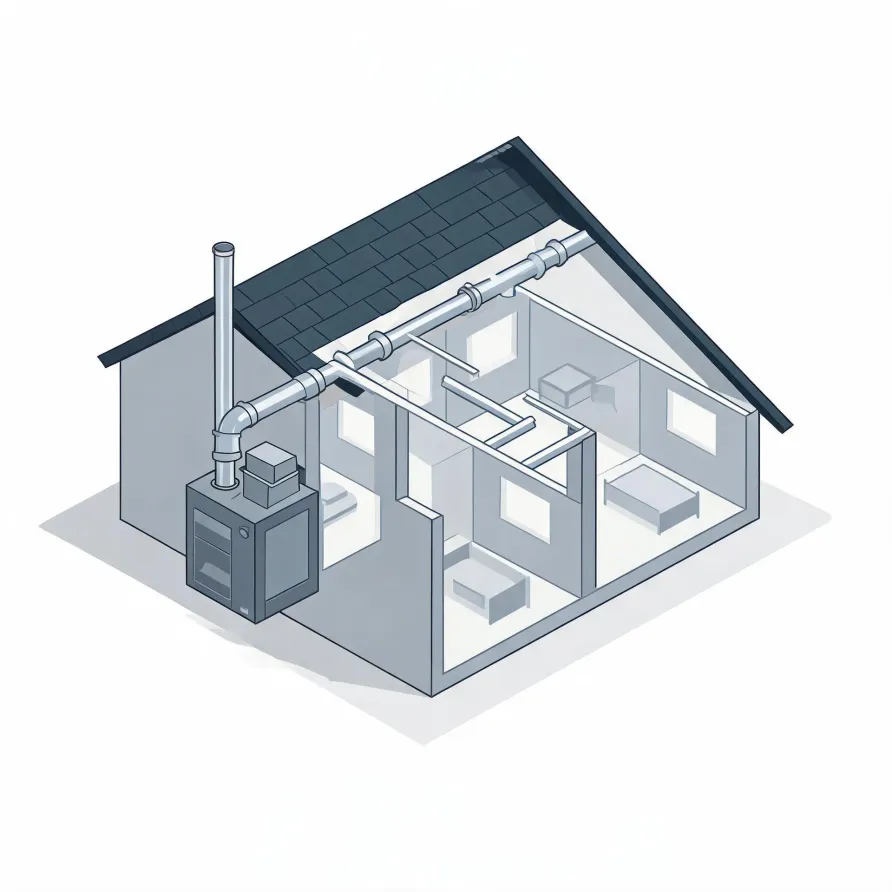
The furnace itself sits in a mechanical room, basement, or utility closet and is the core unit a contractor installs. Inside it, a heat exchanger, a burner assembly, and a blower motor work together to produce and push conditioned air. The flue pipe runs from the furnace to an exterior wall or roofline, carrying combustion gases out of the house.
The thermostat mounts on a main living-area wall and gives the homeowner control over the system. A contractor also installs or connects the gas line at the furnace, the condensate drain line on high-efficiency models, and the fresh-air intake that runs to the outside.
The drawing shows a general layout of these components, and a licensed contractor determines exactly what applies to your house and its existing setup.
Find a contractor in Naugatuck Valley Planning RegionNaugatuck Valley Planning Region by the Numbers
Half the homes in Naugatuck Valley Planning Region, Connecticut were built in 1969 or earlier (2020-2024 ACS 5-year).
U.S. Census Bureau, 2020-2024 American Community Survey 5-Year EstimatesNaugatuck Valley Planning Region, Connecticut holds 192,551 housing units (2020-2024 ACS 5-year).
U.S. Census Bureau, 2020-2024 American Community Survey 5-Year EstimatesOwners occupy 68.6% of the occupied homes in Naugatuck Valley Planning Region, Connecticut (2020-2024 ACS 5-year).
U.S. Census Bureau, 2020-2024 American Community Survey 5-Year EstimatesFurnace Installation Rules & Codes for Naugatuck Valley Planning Region, Connecticut5 sourced standards and laws
What the Installation Actually Looks Like
Non-weatherized gas furnaces manufactured on or after November 19, 2015 must reach 80.0 percent AFUE.
Non-weatherized oil-fired furnaces manufactured on or after November 19, 2015 must reach 83.0 percent AFUE.
Mobile home gas furnaces manufactured on or after November 19, 2015 must reach 80.0 percent AFUE.
Non-weatherized gas furnaces manufactured on or after December 18, 2028 must reach 95.0 percent AFUE, up from the 80.0 percent minimum that applies to units manufactured before that date.
What Connecticut Requires for HVAC Work in Naugatuck Valley Planning Region
Connecticut requires a state licence to perform, or to advertise, heating, piping and cooling work: no person may practise an occupation this chapter covers without first obtaining one.