Tell us about the job
Takes about a minute. No obligation.
Homes in Southeastern Connecticut Planning Region, CT run heat about eight months a year, from October through May. That load falls on the burner, the heat exchanger, and the ignition system, which cycle repeatedly across those months and accumulate wear in a way that standby components do not. A contractor quoting furnace repair here checks the heat exchanger for cracks and the ignition system for degradation early in the diagnosis, because those are the parts the season actually consumes. A homeowner who waits until the system fails on the coldest day hands the contractor a harder job: the fault has usually been building for a while.
Furnace repair in a house this old frequently opens onto components that were never matched to each other from the start. Contractors here find heat exchangers, flue connections, and control wiring that accumulated across multiple replacement cycles, each done without redesigning what surrounded it. Half the homes in Southeastern Connecticut Planning Region, Connecticut were built in 1969 or earlier (2020-2024 ACS 5-year). That history means the part a contractor orders has to fit not just the furnace but the assembly around it, and confirming that fit requires opening the system before the repair scope is set.
The Parts of a Furnace a Contractor Checks First
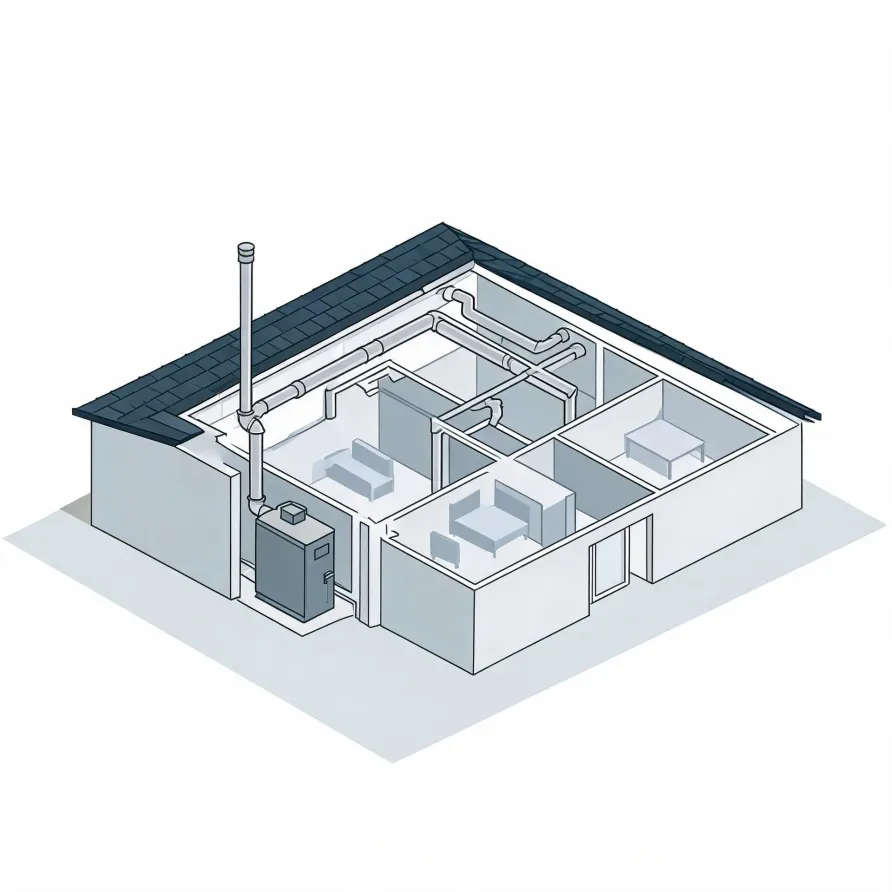
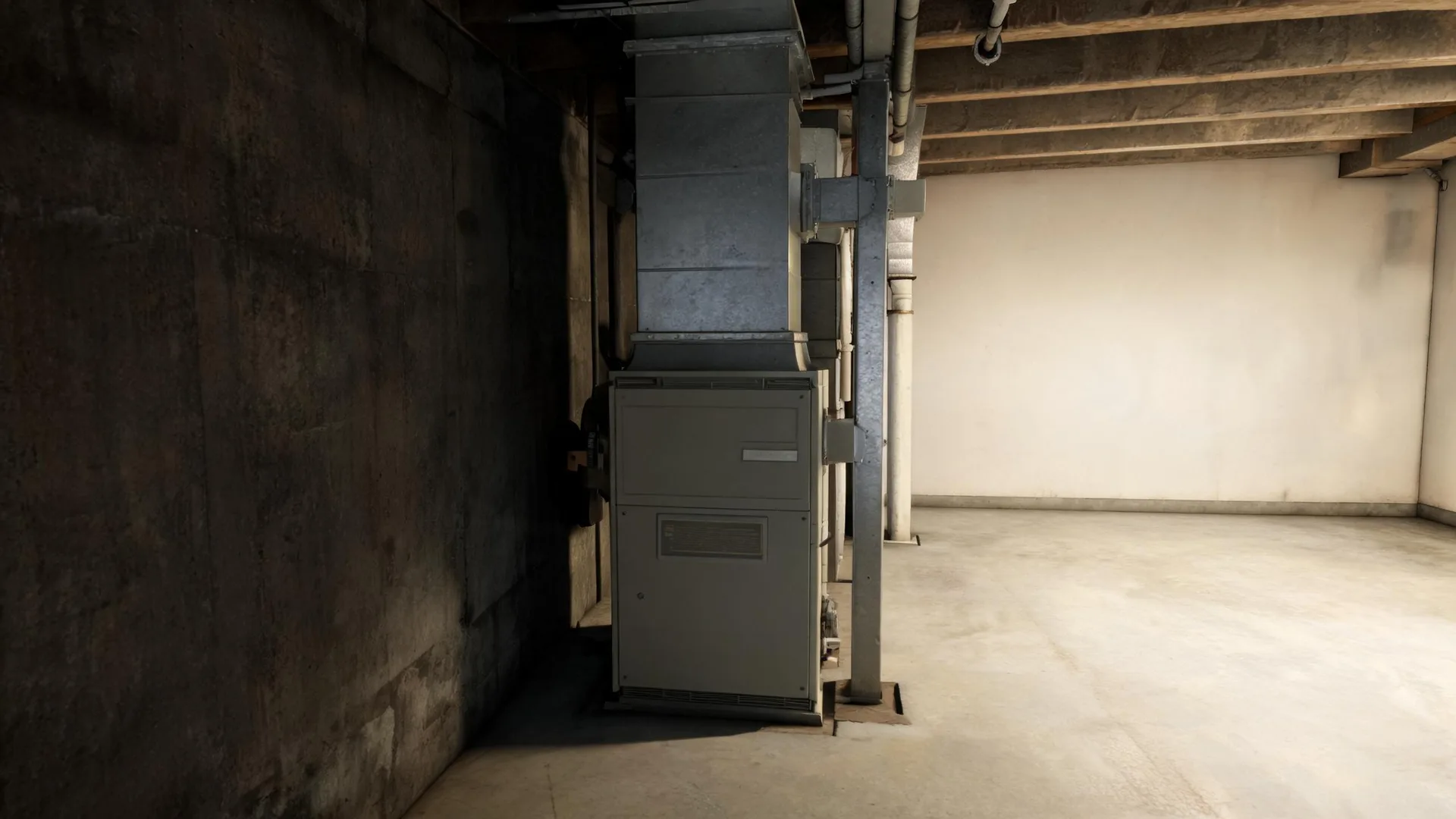
The furnace itself sits in the basement, utility room, or crawl space and is the piece a contractor goes to first. Inside it, the heat exchanger is the part that most often brings a furnace down: a crack there lets combustion gases pass where they should not, and the burners that feed it can clog or misfire in ways that show up as no heat or an irregular flame.
The blower motor sits at the base of the furnace cabinet and pushes conditioned air out through the house. Alongside it, the draft inducer pulls exhaust gases out through the flue, and the control board reads signals from the thermostat and tells every other component when to move.
The drawing shows the general layout of a furnace system, and a licensed contractor determines which components apply to the specific setup in your house.
Find a contractor in Southeastern Connecticut Planning RegionSoutheastern Connecticut by the Numbers
Half the homes in Southeastern Connecticut Planning Region, Connecticut were built in 1969 or earlier (2020-2024 ACS 5-year).
U.S. Census Bureau, 2020-2024 American Community Survey 5-Year EstimatesSoutheastern Connecticut Planning Region, Connecticut holds 126,425 housing units (2020-2024 ACS 5-year).
U.S. Census Bureau, 2020-2024 American Community Survey 5-Year EstimatesOwners occupy 65.1% of the occupied homes in Southeastern Connecticut Planning Region, Connecticut (2020-2024 ACS 5-year).
U.S. Census Bureau, 2020-2024 American Community Survey 5-Year EstimatesFurnace Repair Rules and Codes for Southeastern Connecticut Planning Region, Connecticut5 sourced regulations and standards
What HVAC Repair Looks Like in Southeastern Connecticut
Non-weatherized gas furnaces manufactured on or after November 19, 2015 must reach 80.0 percent AFUE.
Non-weatherized oil-fired furnaces manufactured on or after November 19, 2015 must reach 83.0 percent AFUE.
Mobile home gas furnaces manufactured on or after November 19, 2015 must reach 80.0 percent AFUE.
Non-weatherized gas furnaces manufactured on or after December 18, 2028 must reach 95.0 percent AFUE, up from the 80.0 percent minimum that applies to units manufactured before that date.
What Connecticut Requires for HVAC Repair in Southeastern Connecticut Planning Region, Connecticut
Connecticut requires a state licence to perform, or to advertise, heating, piping and cooling work: no person may practise an occupation this chapter covers without first obtaining one.