Tell us about the job
Takes about a minute. No obligation.
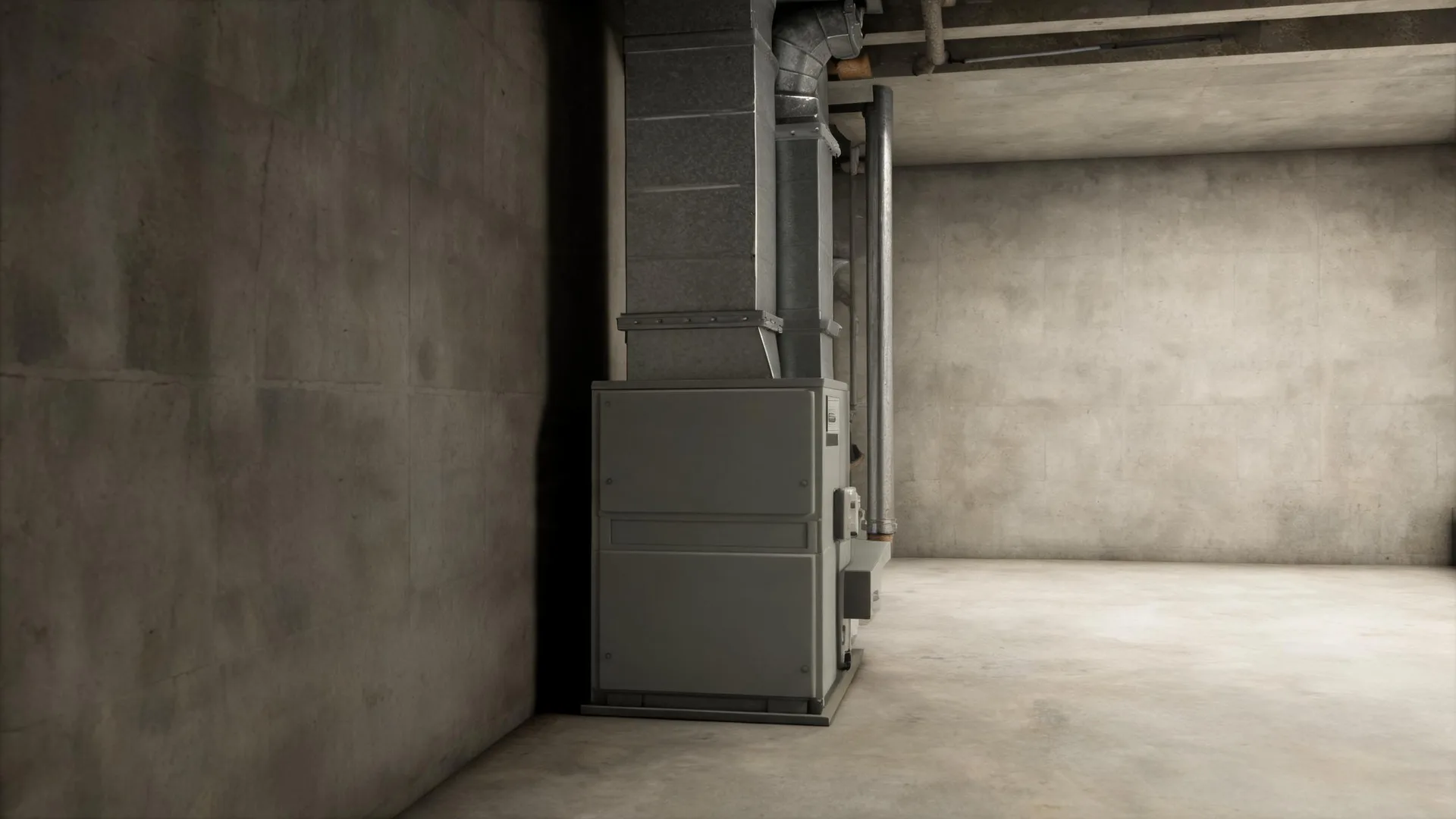
A furnace repair quote here starts with the burner assembly and ignition system, because those are the parts that have been cycling longest. Homes in Capitol Planning Region, CT run heat about eight months a year, from October through May. Every start-up stresses the igniter, and every shutdown stresses the heat exchanger through thermal expansion and contraction. A contractor who skips a close inspection of those components and jumps straight to the blower or the controls is working the wrong priority. Cracks in the heat exchanger and worn igniters account for most of what gets found on this equipment.
Furnaces in this part of Connecticut frequently sit inside shells that were never built around them. Half the homes in Capitol Planning Region, Connecticut were built in 1966 or earlier (2020-2024 ACS 5-year). When a contractor opens a furnace here, what they find in the heat exchanger, burner assembly, and flue connections reflects how the system was fitted into a space designed for something else entirely. Parts that sit at an angle, flue runs that take an extra bend, draft conditions that differ from what the equipment was rated for: these are the details that determine whether a repair is straightforward or whether fixing one component surfaces another. Stock this old carries that history in ways the nameplate does not show.
The Parts of a Furnace a Contractor Checks First
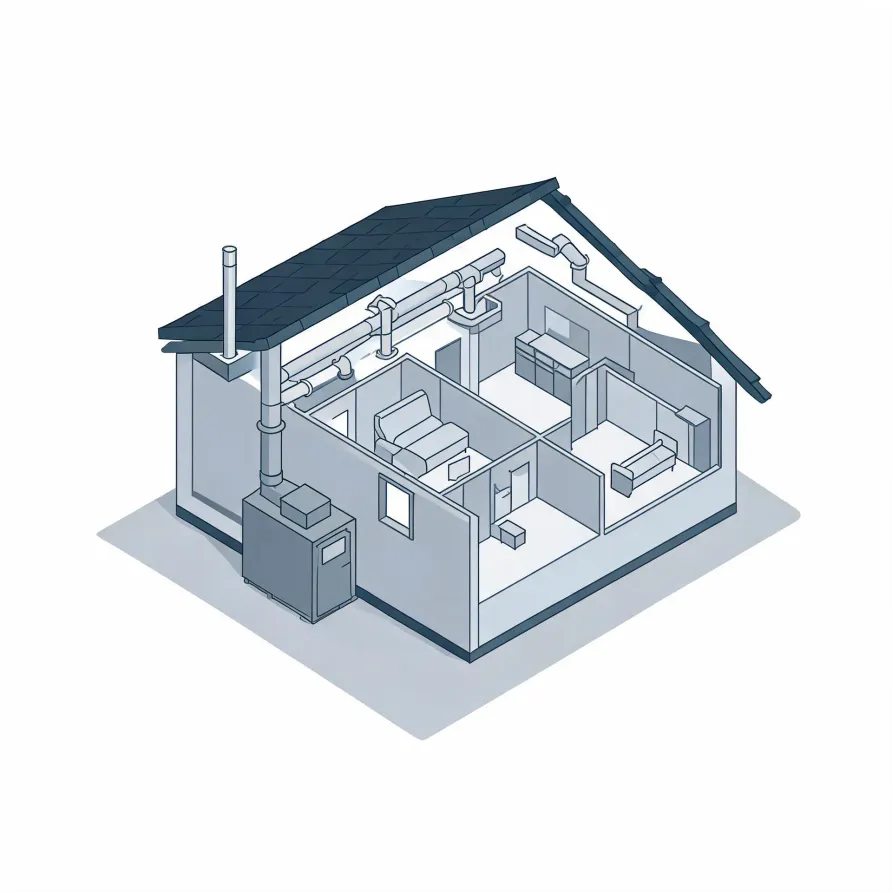
The furnace itself sits in the basement, utility room, or a dedicated closet and is the core of what a contractor opens first. Inside it, the heat exchanger is the piece most likely behind a heating problem: a crack there lets combustion gases into your living air, and a failed one shuts the system down. The burners, igniter, and flame sensor all live inside that same cabinet and are early stops in any diagnosis.
The blower motor and its fan sit at the base of the furnace cabinet and push conditioned air out through the house. The flue pipe runs from the top of the furnace up and out of the house, carrying exhaust gases away, and a block or breach there shows up fast. The thermostat on your wall is the last piece a contractor checks: it tells the furnace when to fire and a faulty signal there can look like a furnace failure.
The drawing shows the typical layout of these components, and a licensed contractor determines which parts apply to your specific system and home.
Find a contractor in Capitol Planning RegionCapitol Planning Region, CT: Facts About the Area
Half the homes in Capitol Planning Region, Connecticut were built in 1966 or earlier (2020-2024 ACS 5-year).
U.S. Census Bureau, 2020-2024 American Community Survey 5-Year EstimatesCapitol Planning Region, Connecticut holds 416,559 housing units (2020-2024 ACS 5-year).
U.S. Census Bureau, 2020-2024 American Community Survey 5-Year EstimatesOwners occupy 65.7% of the occupied homes in Capitol Planning Region, Connecticut (2020-2024 ACS 5-year).
U.S. Census Bureau, 2020-2024 American Community Survey 5-Year EstimatesFurnace Repair Rules & Codes for Capitol Planning Region, Connecticut5 sourced rules and standards
What the repair visit looks like
Non-weatherized gas furnaces manufactured on or after November 19, 2015 must reach 80.0 percent AFUE.
Non-weatherized oil-fired furnaces manufactured on or after November 19, 2015 must reach 83.0 percent AFUE.
Mobile home gas furnaces manufactured on or after November 19, 2015 must reach 80.0 percent AFUE.
Non-weatherized gas furnaces manufactured on or after December 18, 2028 must reach 95.0 percent AFUE, up from the 80.0 percent minimum that applies to units manufactured before that date.
What Connecticut and Capitol Planning Region Require for HVAC Repair Work
Connecticut requires a state licence to perform, or to advertise, heating, piping and cooling work: no person may practise an occupation this chapter covers without first obtaining one.